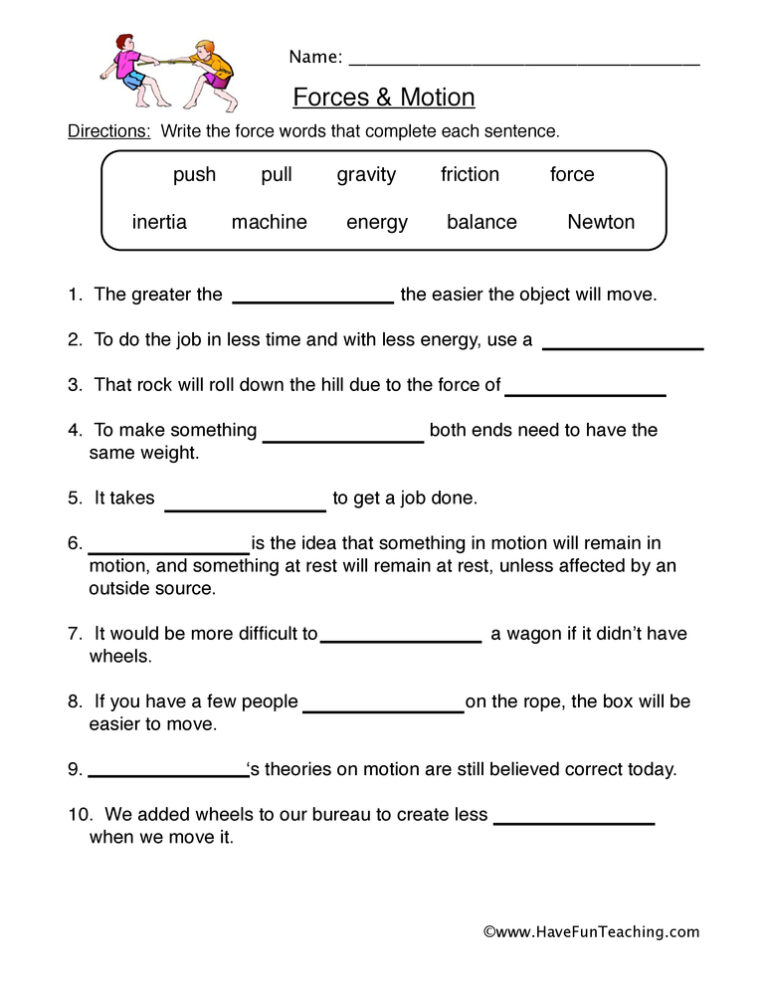
A 3rd grade forces motion worksheet where students use a word bank to complete eight sentences about force, push, pull, gravity, friction, motion, speed, and magnets. Includes an answer key for easy, no-prep science practice.
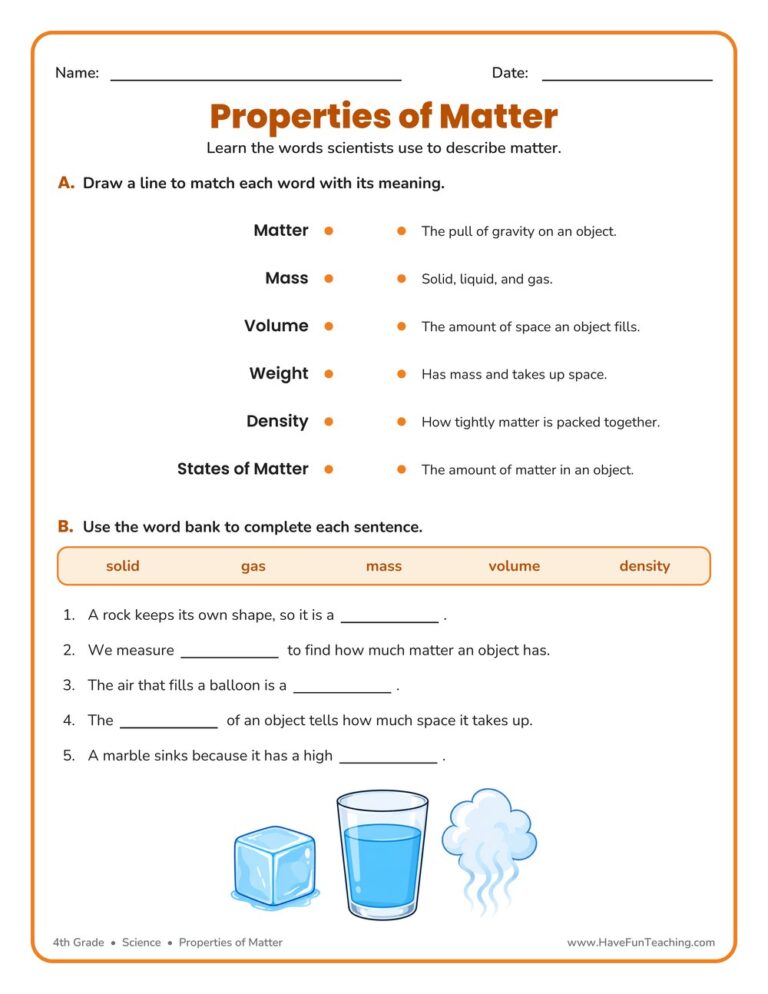
This Properties of Matter Definitions Worksheet helps 4th grade students match key science terms—matter, mass, volume, weight, and density—to their meanings and complete sentences about solids and gases. Answer key included for fast, no-prep science practice.
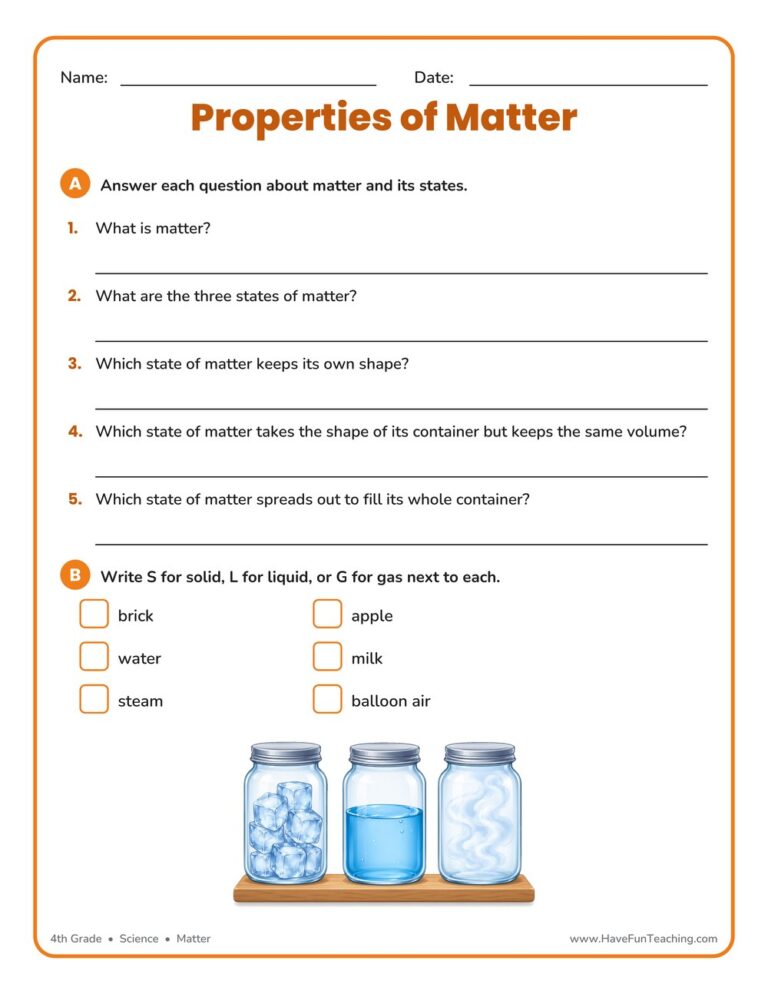
This 4th Grade Properties of Matter Review Worksheet has students answer key questions about matter and sort everyday objects as solid, liquid, or gas. Answer key included — an easy, no-prep way to review states of matter.
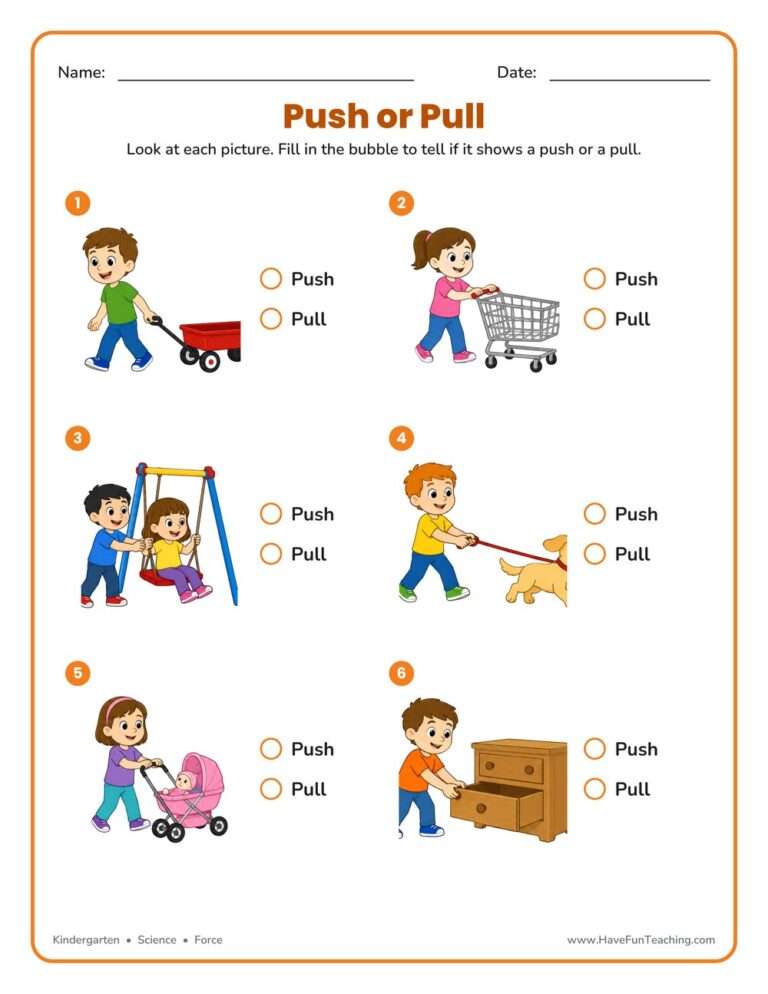
This push or pull force worksheet lets kindergarten students look at six pictures and fill in the bubble to show whether each action is a push or a pull. Includes an answer key—a simple, no-prep introduction to force.
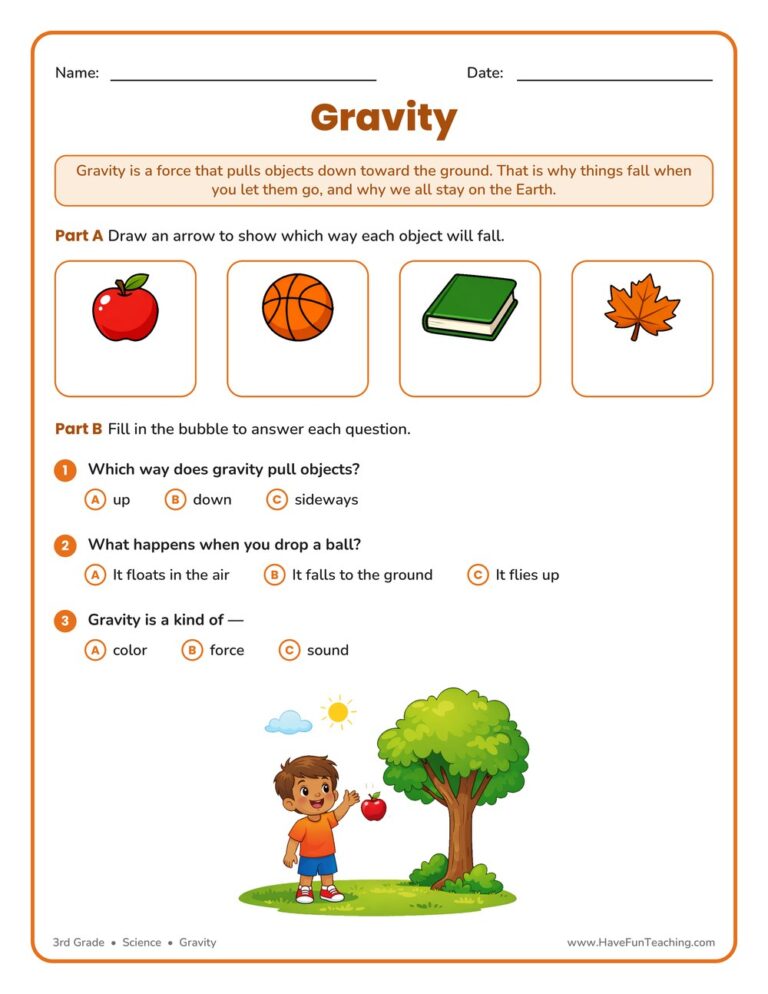
This falling gravity worksheet helps 3rd graders show which way objects fall and explain how gravity pulls things down. Answer key included — a quick, no-prep way to practice force and motion at home or in class.
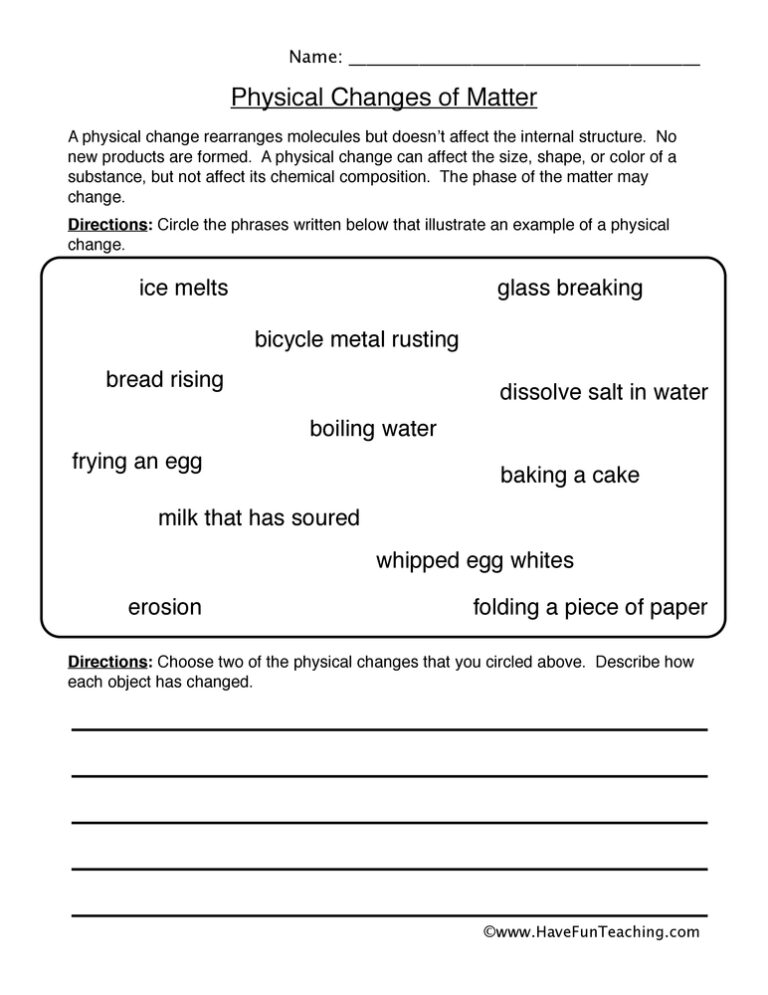
This physical changes matter worksheet asks 5th Grade students to sort eight everyday changes, label three states of matter, and explain their thinking, with an answer key included for fast grading.
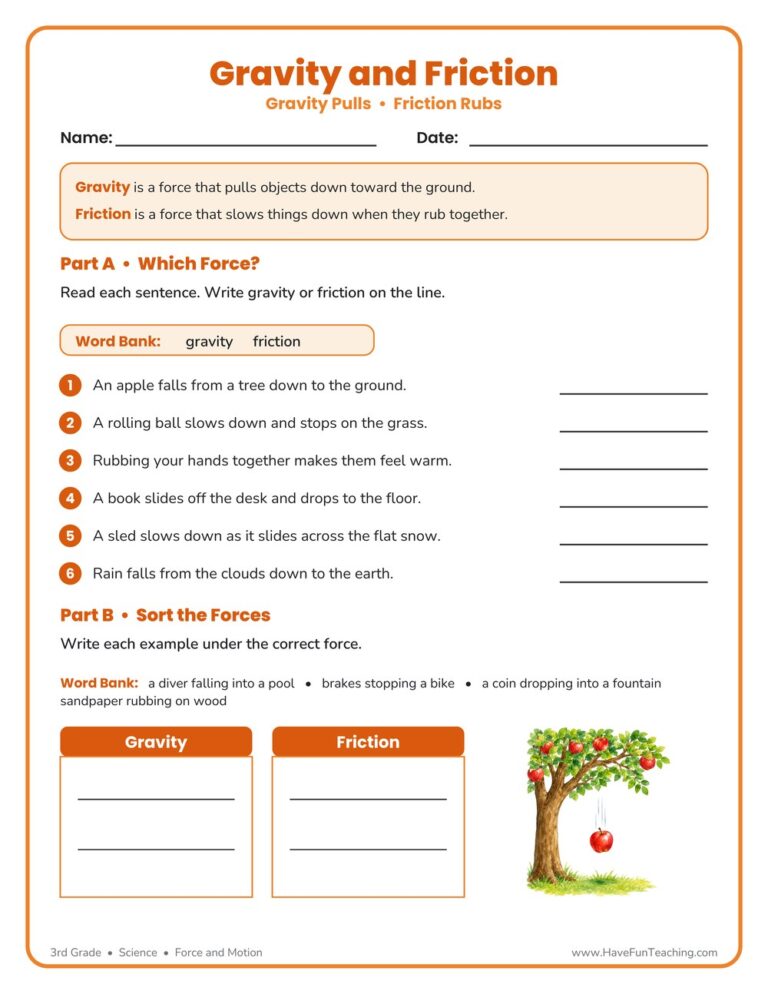
This Gravity or Friction Force Worksheet helps 3rd grade students tell the difference between gravity and friction by identifying and sorting real-life examples. Includes a complete answer key for quick, no-prep science practice.
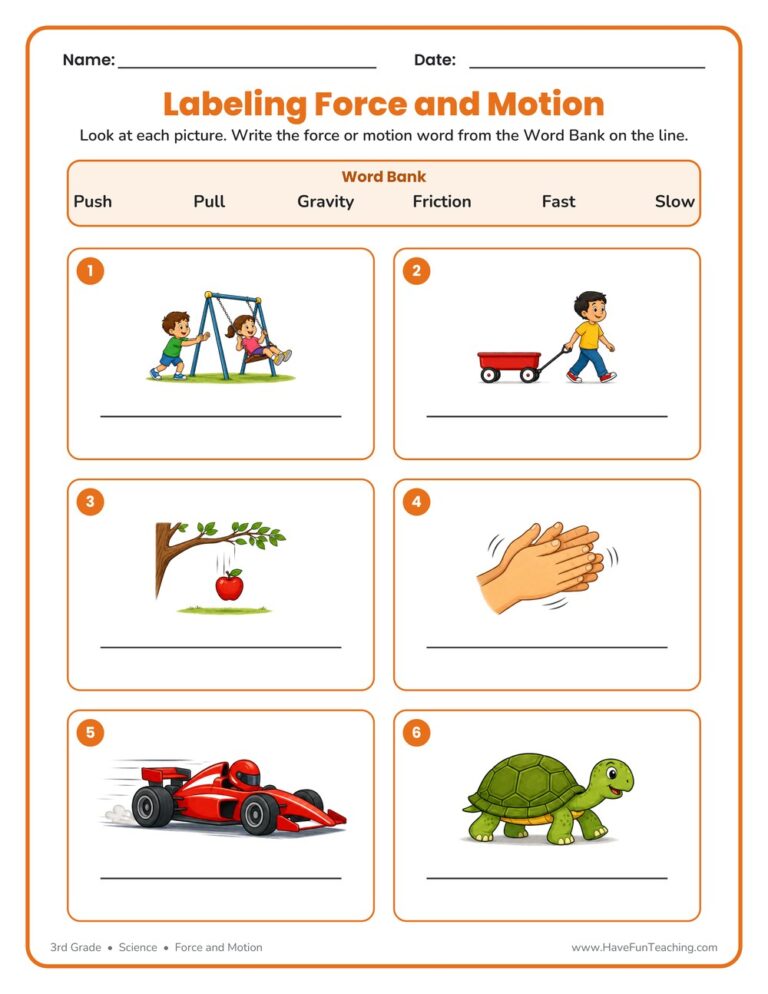
The Labeling Force and Motion Worksheet has 3rd graders label six pictures with push, pull, gravity, friction, fast, and slow from a word bank. Includes an answer key for easy, no-prep science practice.

This Fall Faster Gravity Worksheet asks 3rd graders to predict which dropped object lands first and to explain why, using gravity and air resistance. Answer key included for fast, no-prep science practice.

This Physical Changes Examples Worksheet gives 5th Grade students six sorting items and two written-response questions on physical and chemical change, answer key included, so classifying matter becomes second nature.

This Circuits Worksheet helps 4th Grade students label the battery, bulb, switch, and wire, decide whether a circuit is open or closed, and explain how current flows. Answer key included, so checking work is quick.
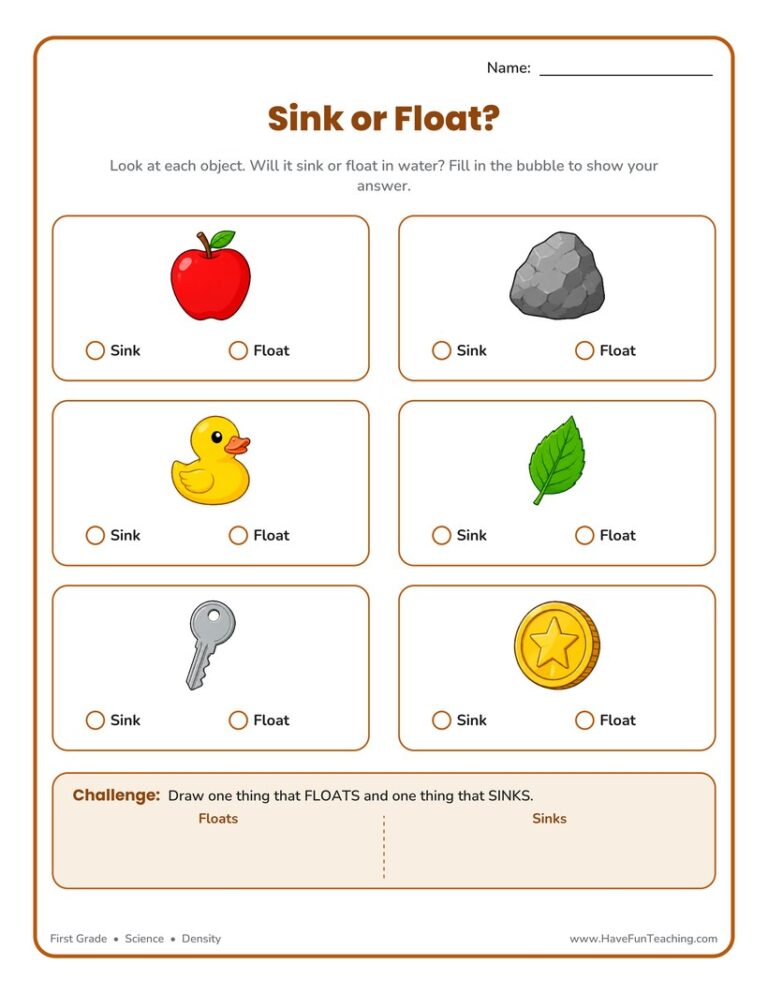
This sink float identify worksheet lets first graders predict whether an apple, rock, duck, and more will sink or float in water. Includes an answer key for a fun, hands-on introduction to density.

This Classifying Matter Worksheet helps 5th graders sort substances into elements, compounds, and mixtures using a handy reference chart. Includes an answer key — perfect for no-prep physical science practice at home or in class.
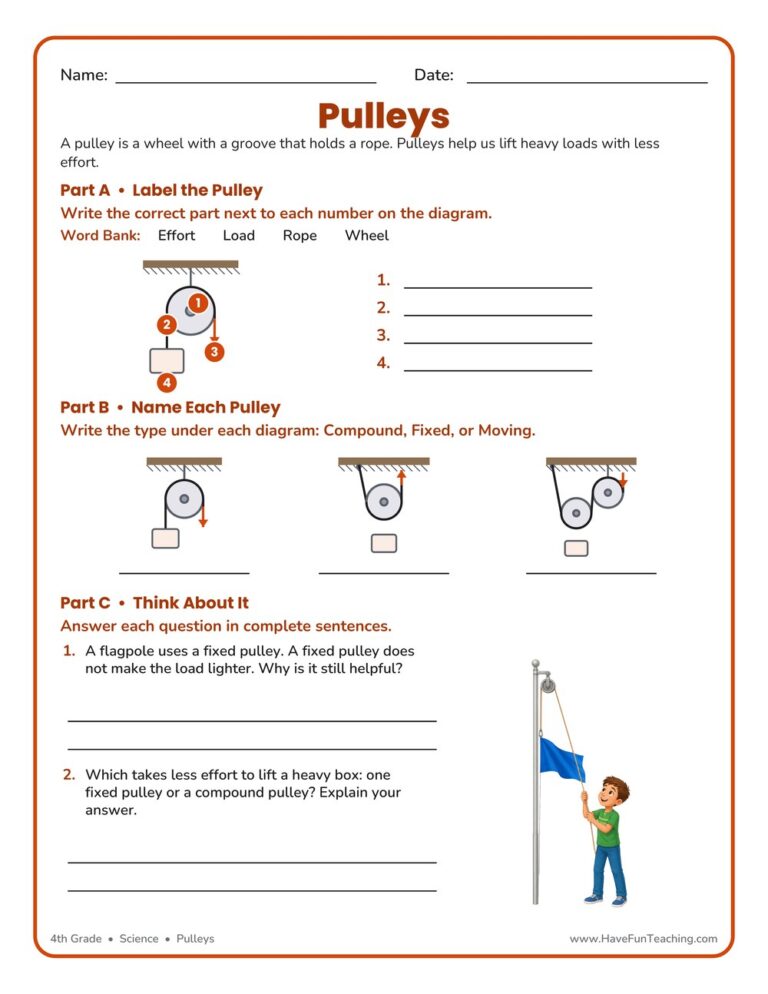
This Pulleys Worksheet helps 4th graders label a pulley, compare fixed, moving, and compound pulleys, and explain how pulleys lift heavy loads. Includes an answer key — a no-prep way to practice simple machines science.
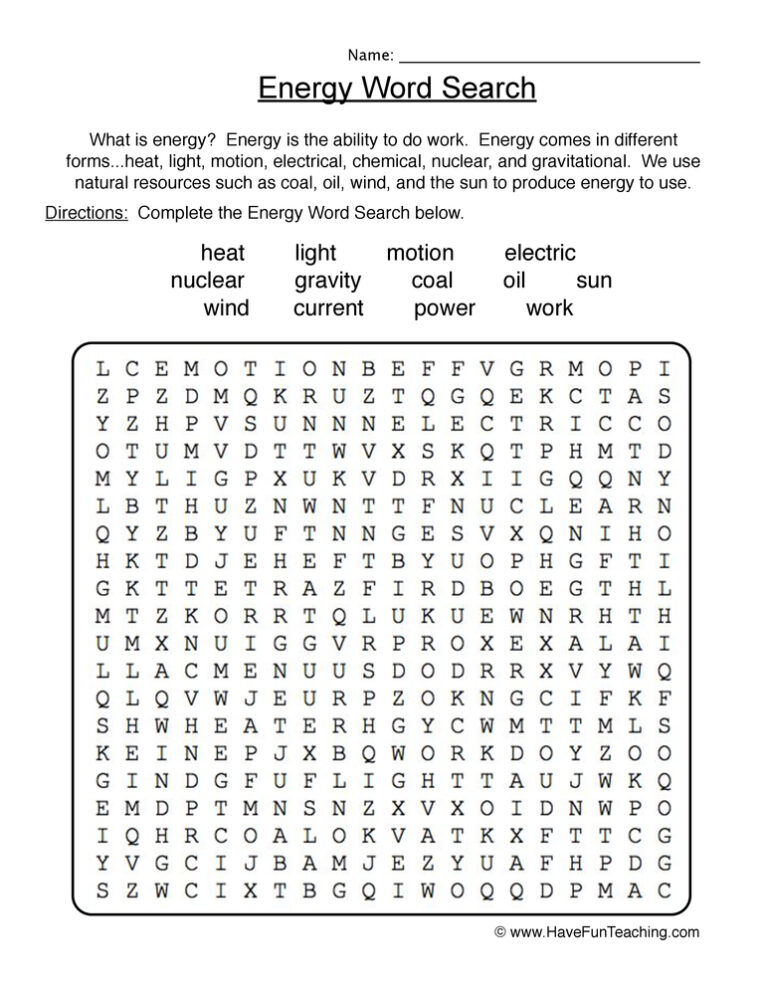
A ten-word Energy Wordsearch Worksheet that helps 3rd graders name the forms and sources of energy, then use one in a sentence of their own. Answer key included for fast, no-prep science review.

This physical properties matter worksheet gives 3rd grade students practice naming color, texture, size, shape, and mass, plus states of matter. An answer key is included, so checking work takes seconds.
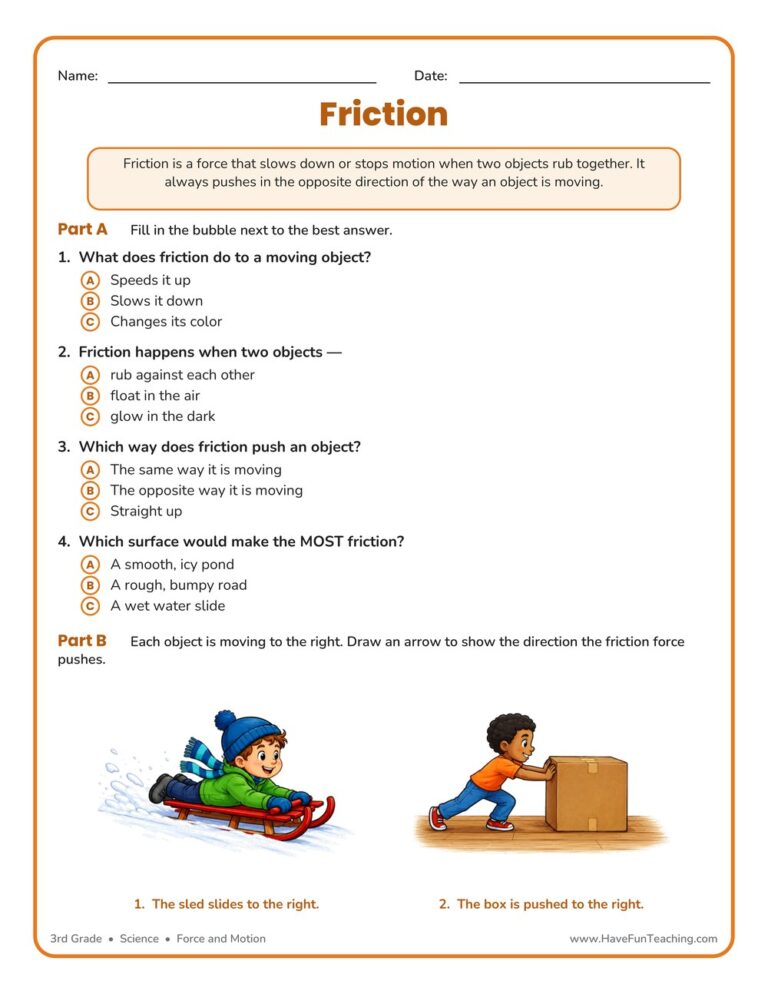
This drawing friction worksheet lets 3rd graders explore force and motion by answering questions and drawing arrows to show which way friction pushes. Answer key included for quick, no-prep science practice.

This Electricity Worksheet pairs a short reading passage with vocabulary and explanation questions that show 4th graders how current, circuits, conductors, and insulators work. Answer key included for fast, no-prep science practice.
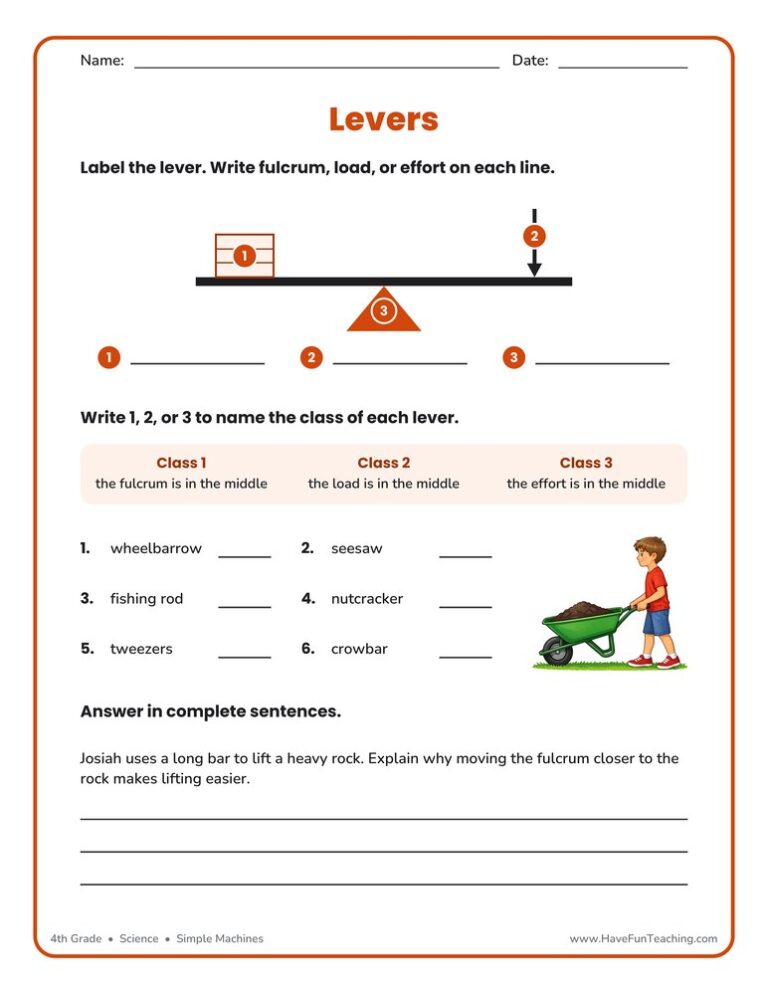
This Levers Worksheet helps 4th grade students label the fulcrum, load, and effort, then name the class of six everyday tools. An answer key is included, so practice checks fast.

This Magnetic Earth Worksheet gives 4th Grade students four magnet words and six real-life clues to match, plus an answer key, so magnetism vocabulary sticks long after the lesson ends.