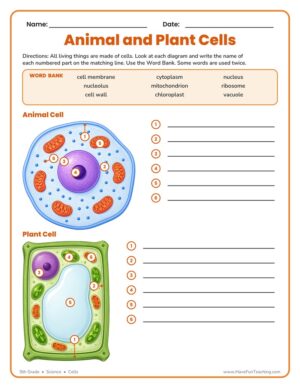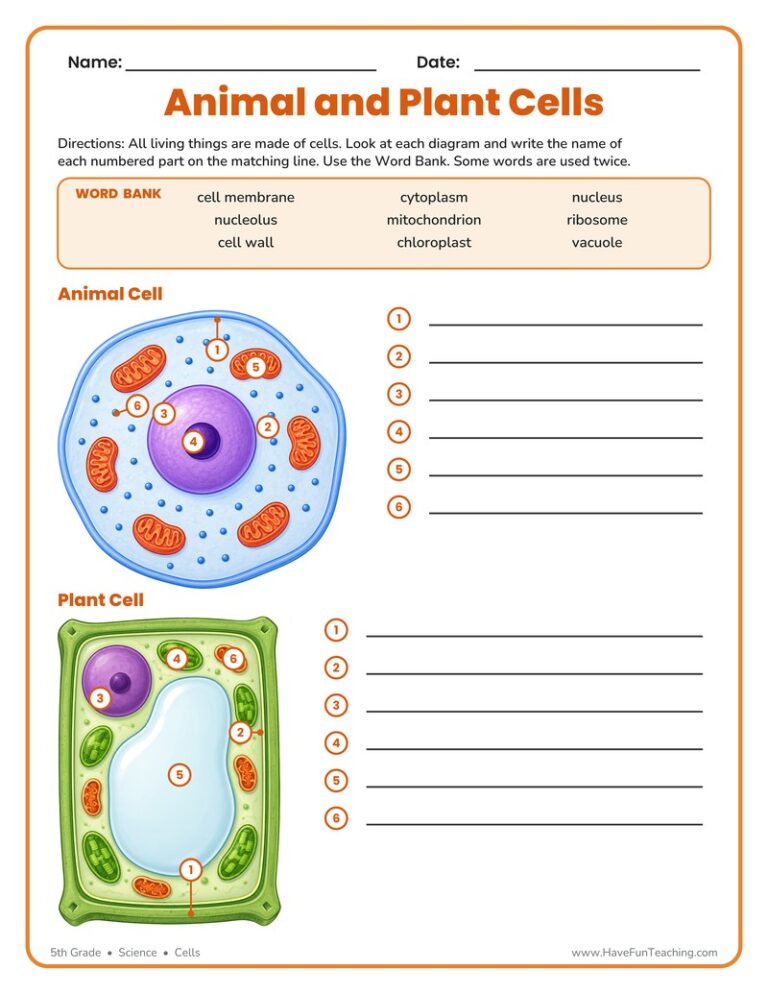
This Animal and Plant Cells Worksheet asks 5th grade students to label the organelles of an animal cell and a plant cell using a word bank. Answer key included for fast, no-prep science review.

The Life Cycle of a Butterfly Worksheet has 2nd graders label the egg, larva, pupa, and adult stages and put them in the correct order. Answer key included for quick, hands-on life science practice.
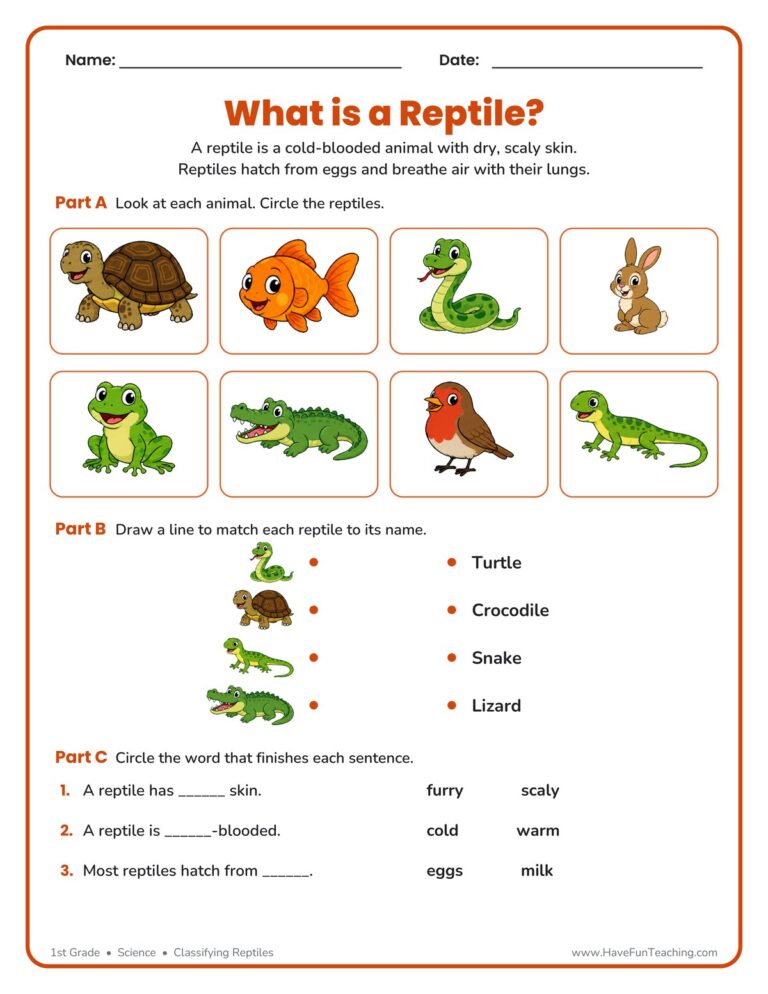
This reptile classification worksheet helps 1st graders sort animals by circling reptiles, matching them to their names, and completing simple reptile facts. Includes a complete answer key for fast, no-prep life science practice.
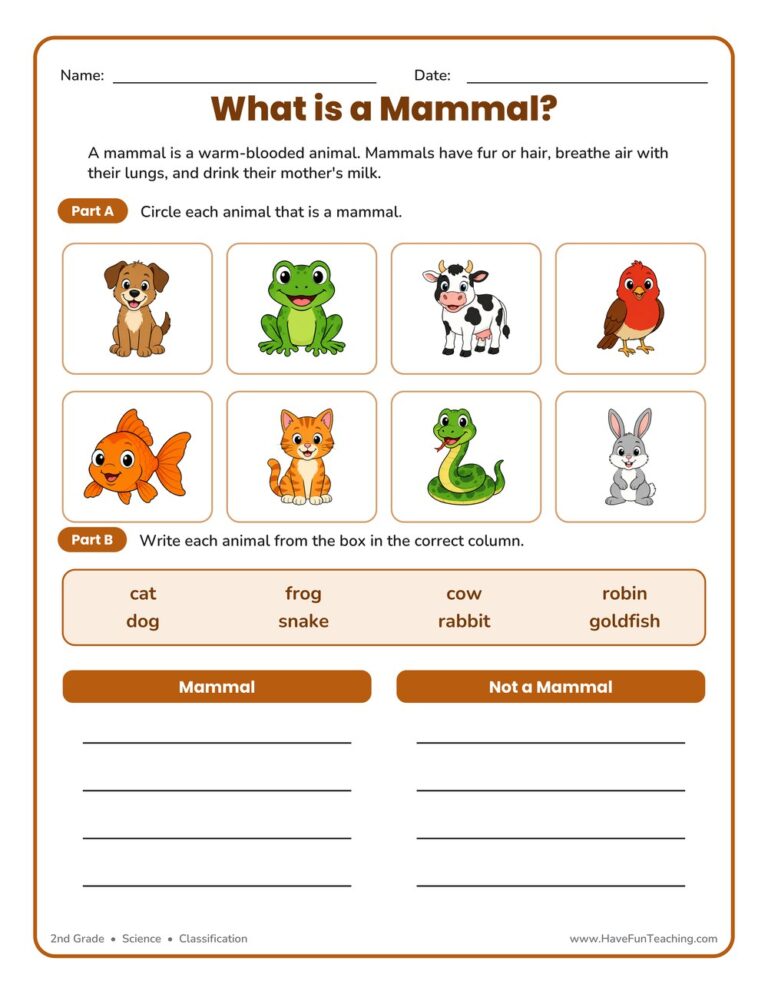
This mammal classification worksheet helps 2nd graders spot mammals and sort animals into mammal and not-a-mammal groups. It includes a complete answer key, making it perfect for no-prep science practice at home or in the classroom.

This matching animal habitats worksheet has 2nd Grade students connect five animals to the ocean, pond, desert, forest, and grassland, then finish three sentences. An answer key is included for fast, no-prep science practice.
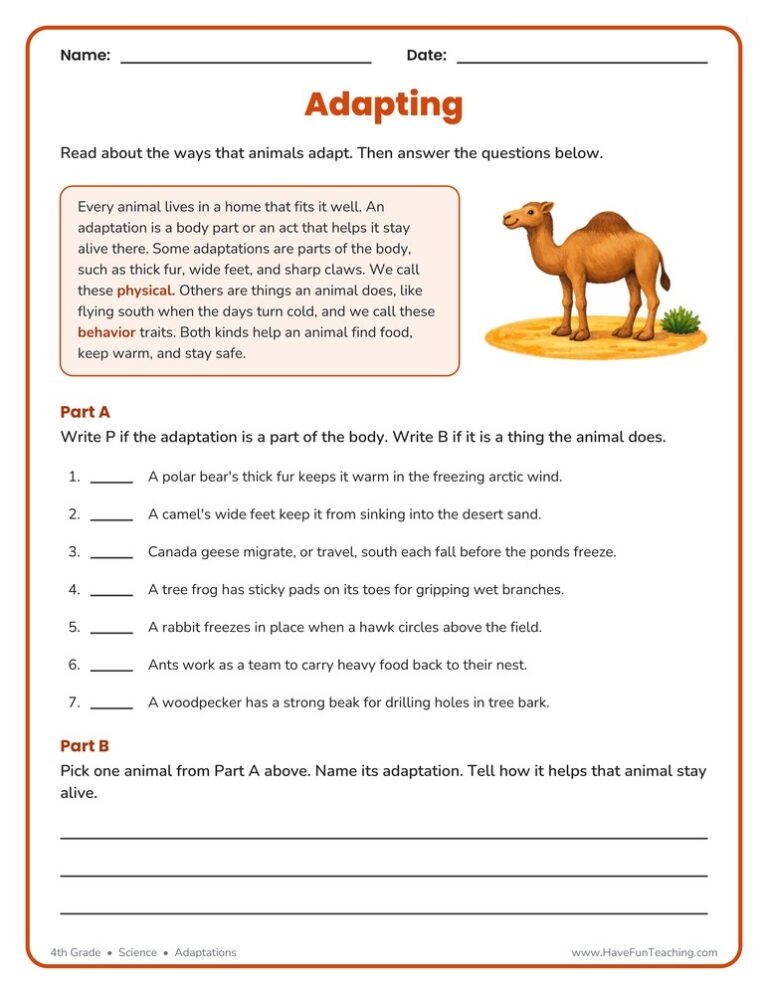
This adaptation worksheet has 4th graders sort seven animal traits into physical and behavioral adaptations, then explain how one helps an animal survive. Answer key included for fast, no-prep life science practice.

This animal words matching worksheet has Kindergarten students match four animal names to their pictures, then trace three more. Answer key included for fast, no-prep science and sight-word practice.
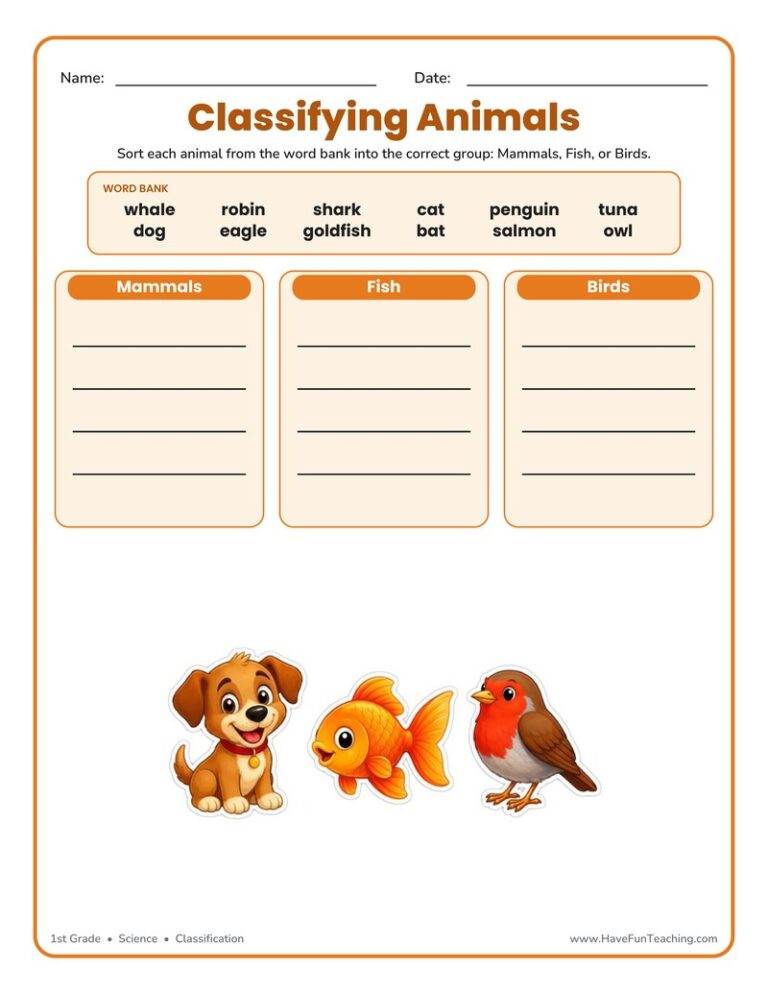
A 1st grade Mammals, Fish, or Birds Classifying Animals Worksheet where students sort a word bank of animals into three groups. Includes a complete answer key for quick, no-prep science practice.

This Snake Rebus Worksheet gives 1st graders a picture-supported story to read aloud, then four pictures to label with the matching word. Answer key included, so fluency practice takes almost no prep.
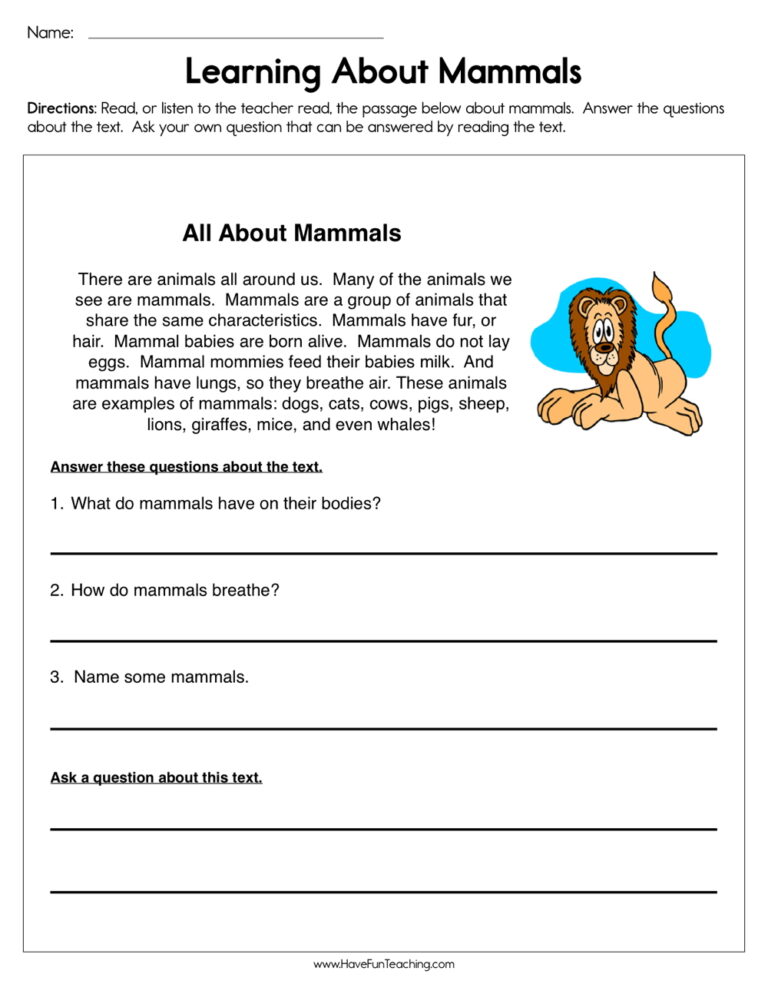
This Learning about Mammals Worksheet gives 1st graders a short informational passage and five fill-in-the-bubble questions about mammal traits. An answer key is included, so reading comprehension practice takes no prep at all.
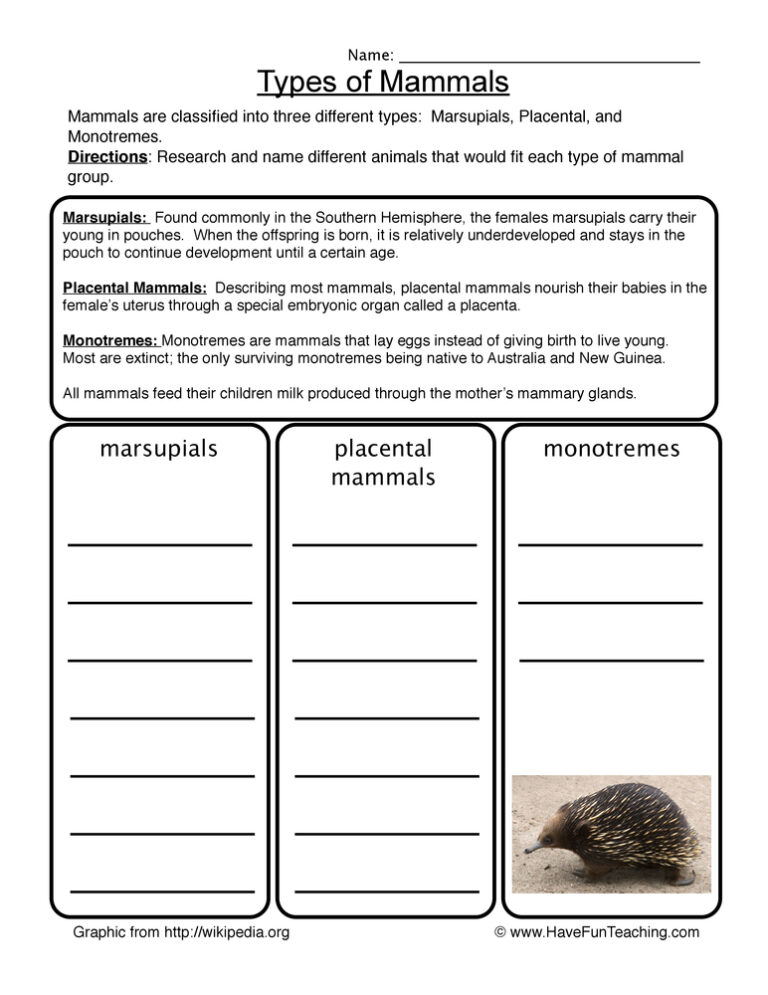
A three-part mammals worksheet that has 5th graders define, sort, and explain the three mammal groups: marsupials, placental mammals, and monotremes. Answer key included for fast, no-prep science practice.

Use this Importance of Farming Worksheet to help 1st Grade students sort six farm foods into plants and animals and decide what farms really give people. Answer key included for fast, no-prep science practice.
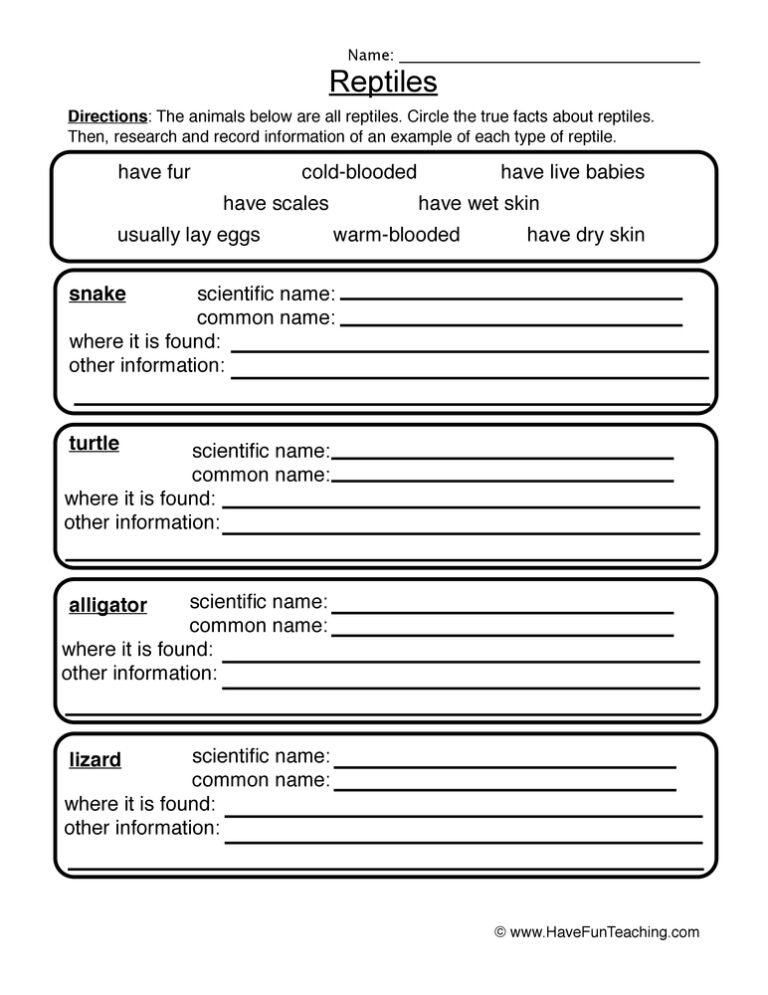
This reptiles worksheet has 3rd Grade students check reptile facts, sort eight animals into reptile and not-a-reptile columns, and explain how a frog differs. An answer key is included, so checking work takes seconds.

An animals bar graph worksheet for 2nd grade: students color one box per animal to build a four-category bar graph, then compare and add using it. Answer key included, so checking data work takes seconds.
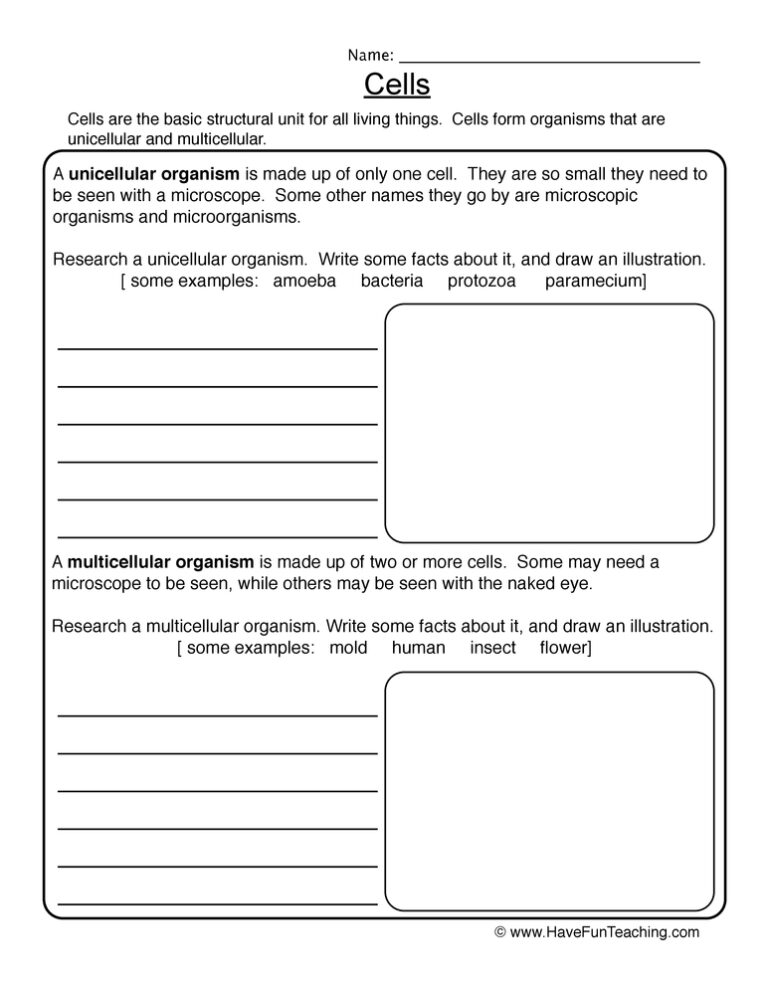
This cells worksheet has 5th graders sort eight living things into unicellular and multicellular columns, then use clues to classify four more. An answer key is included, so science practice is ready to print and grade in minutes.

This bird classification worksheet asks 3rd grade students to sort eight animals into birds and not birds, then match four trait clues. A full answer key makes the sort quick to check.

This animal habitats worksheet asks 3rd Grade students to match animals to their habitats, sort six animals into two environments, and explain one desert adaptation. An answer key is included for fast, no-prep science practice.
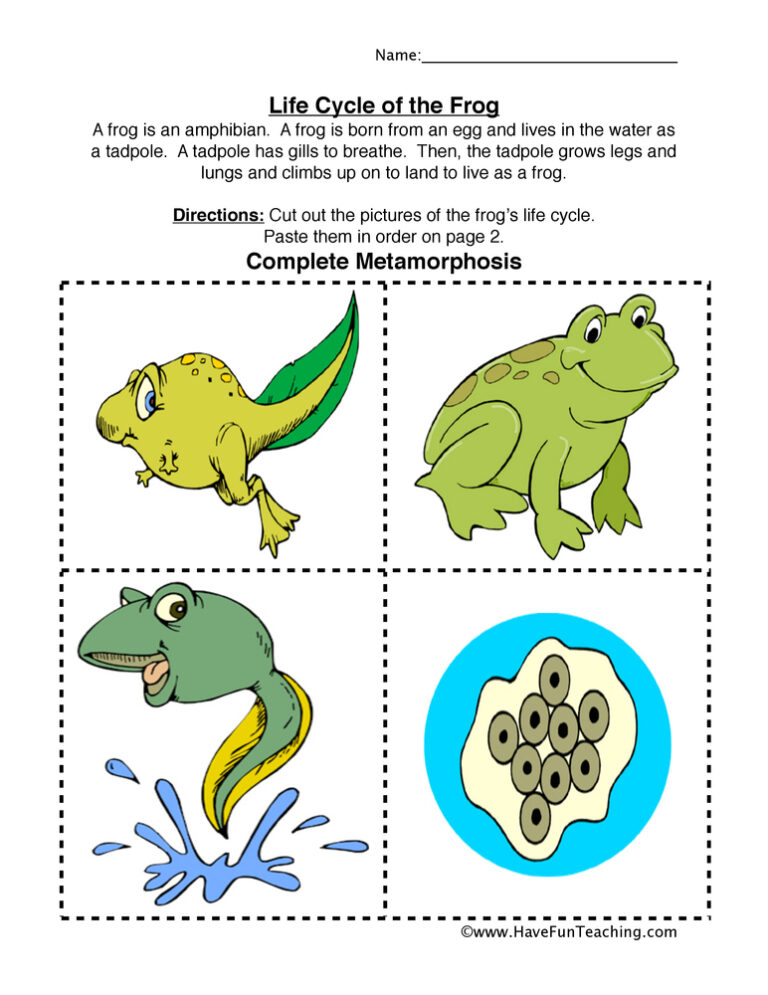
This Frog Life Cycle Worksheet has second graders order and name the four stages of a frog's life: egg, tadpole, froglet, and frog. An answer key is included, so grading takes seconds.
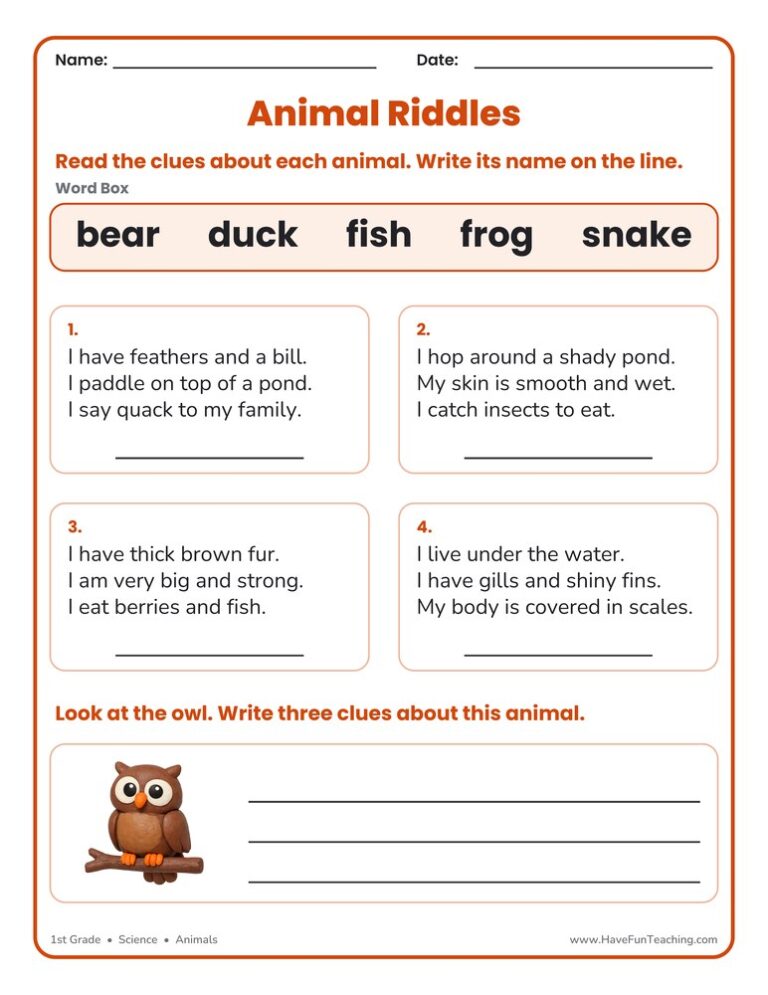
This animal riddles worksheet has first graders read three clues about an animal, choose its name from a word box, and then write their own clues about an owl. Answer key included for quick, no-prep science practice.
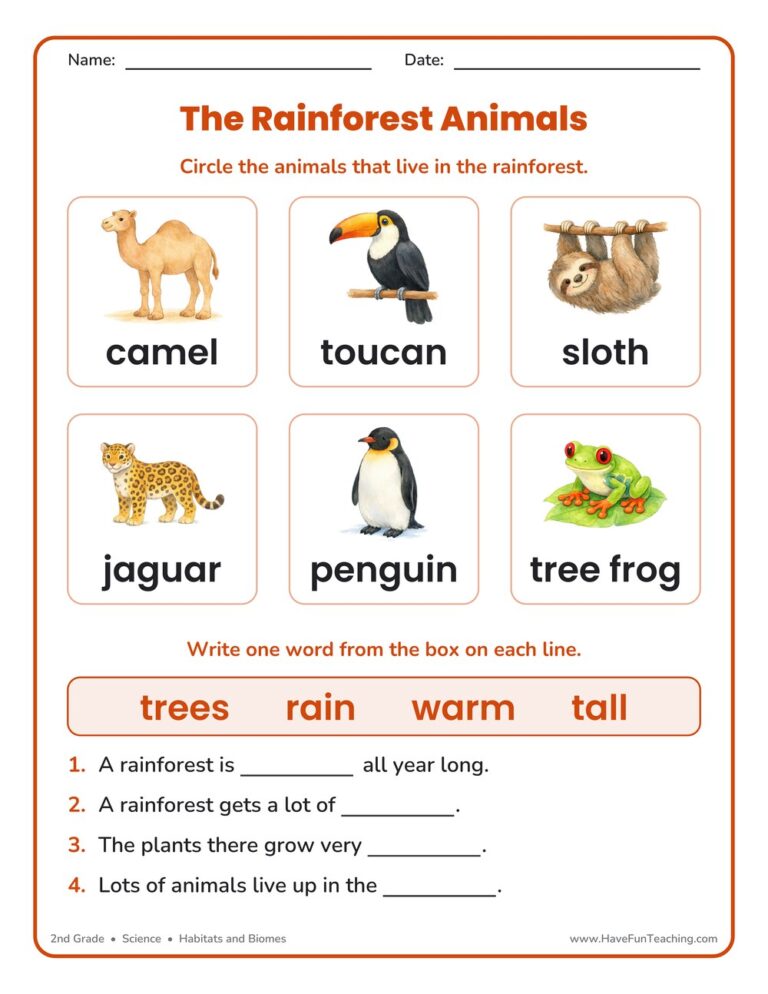
This rainforest animals worksheet asks 2nd Grade students to circle four rainforest animals and finish sentences about their habitat. Answer key included, so habitat practice takes only minutes to assign and check.