

This Writing Graphic Organizer Worksheet helps 2nd graders plan informative writing by choosing a topic, listing three facts, and adding a closing sentence. A simple, no-prep planning page for confident, organized young writers.

This Asking Questions About Pictures Worksheet gives 1st Grade students an illustrated scene, four fill-in-the-bubble questions, and room to write a question of their own. Answer key included, so checking takes seconds.

This feelings worksheet gives 3rd grade students a short passage about emotions plus reading comprehension questions and a reading-response prompt. Includes a complete answer key, a gentle way to build reading skills and emotional awareness.

This Fables The Lion and The Mouse Worksheet gives 2nd graders an original retelling of Aesop’s fable, four comprehension questions and a written item on the lesson. Answer key included for quick, no-prep practice.
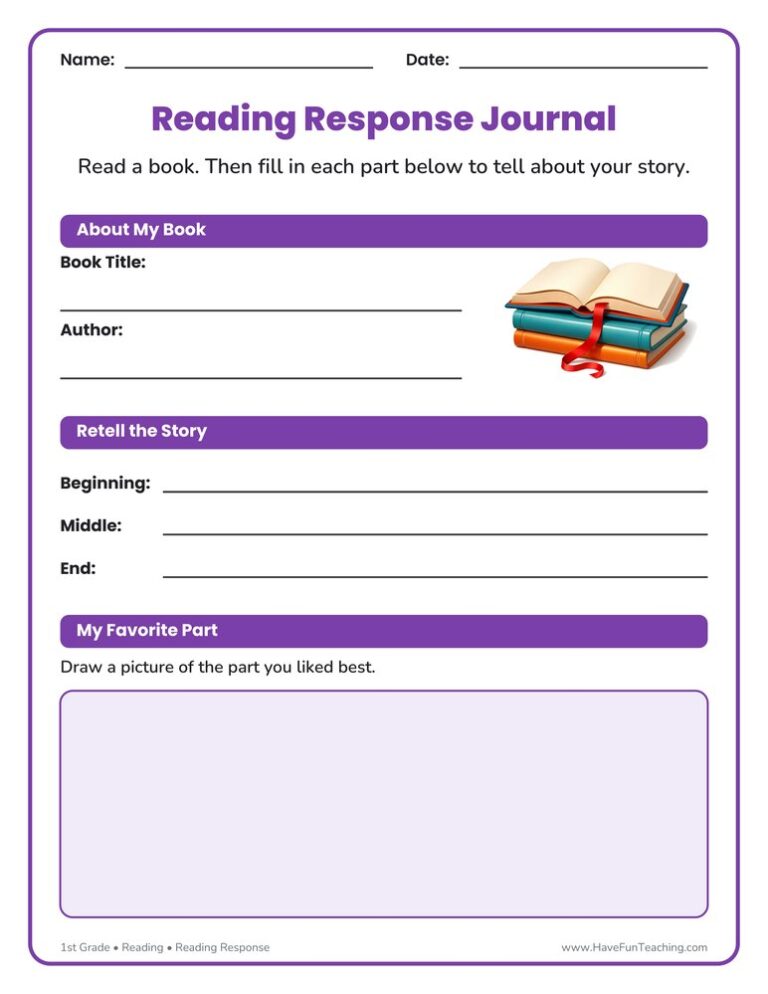
A reading response journal worksheet for 1st grade that works with any book: students record the title and author, retell the beginning, middle, and end, and draw their favorite part. Reusable all year for real comprehension practice.
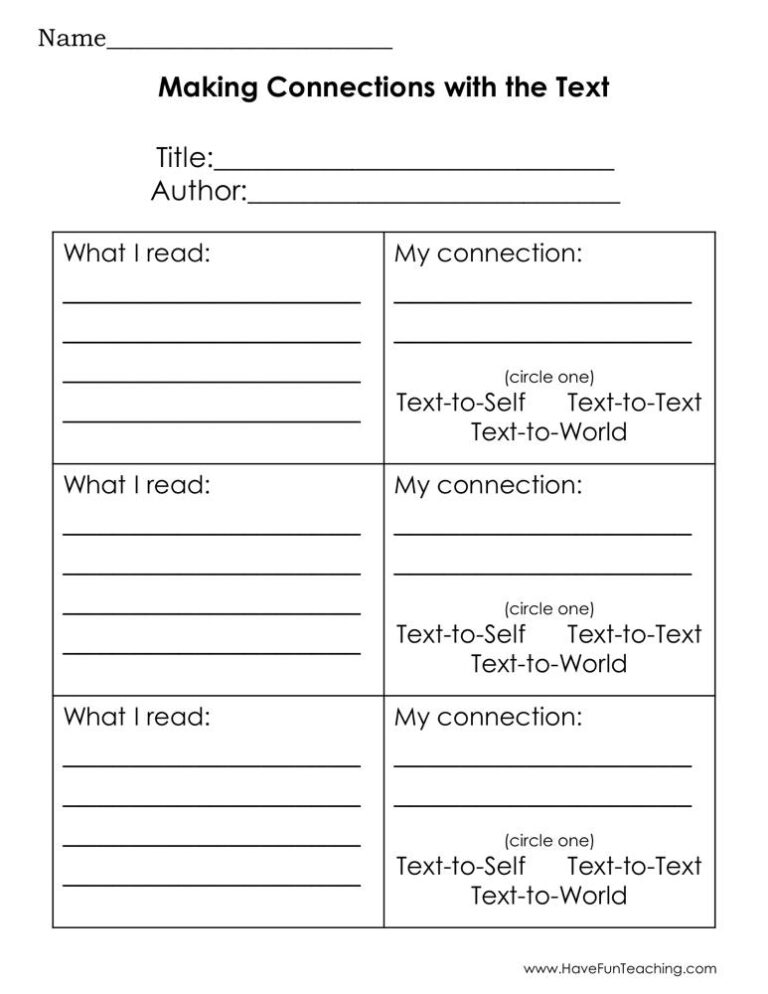
This Making Connections with the Text Graphic Organizer Worksheet gives 3rd Grade readers three places to record what they read, explain the connection they made, and name its kind. Use it with any book for deeper, more thoughtful reading.
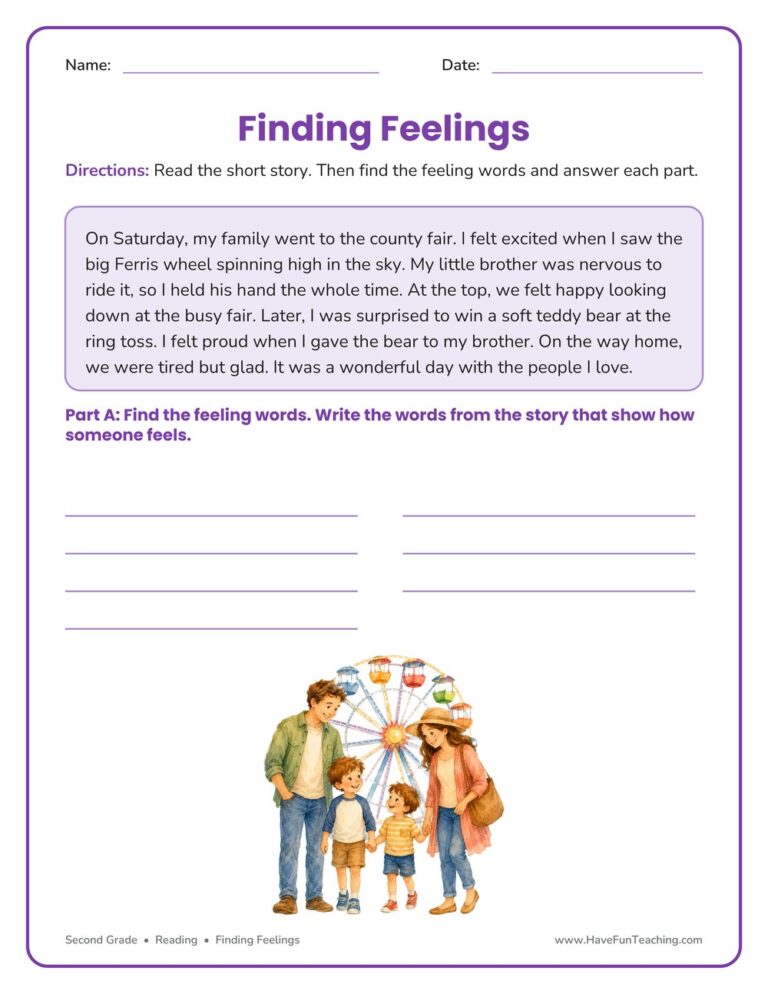
This Finding Feelings Worksheet has second graders read a short story, find the feeling words, and match story moments to emotions. Answer key included — a no-prep way to build reading comprehension and empathy.

This small group checklist worksheet lets 2nd grade students check off six discussion rules they followed and finish one sentence about what they learned from their group that day.
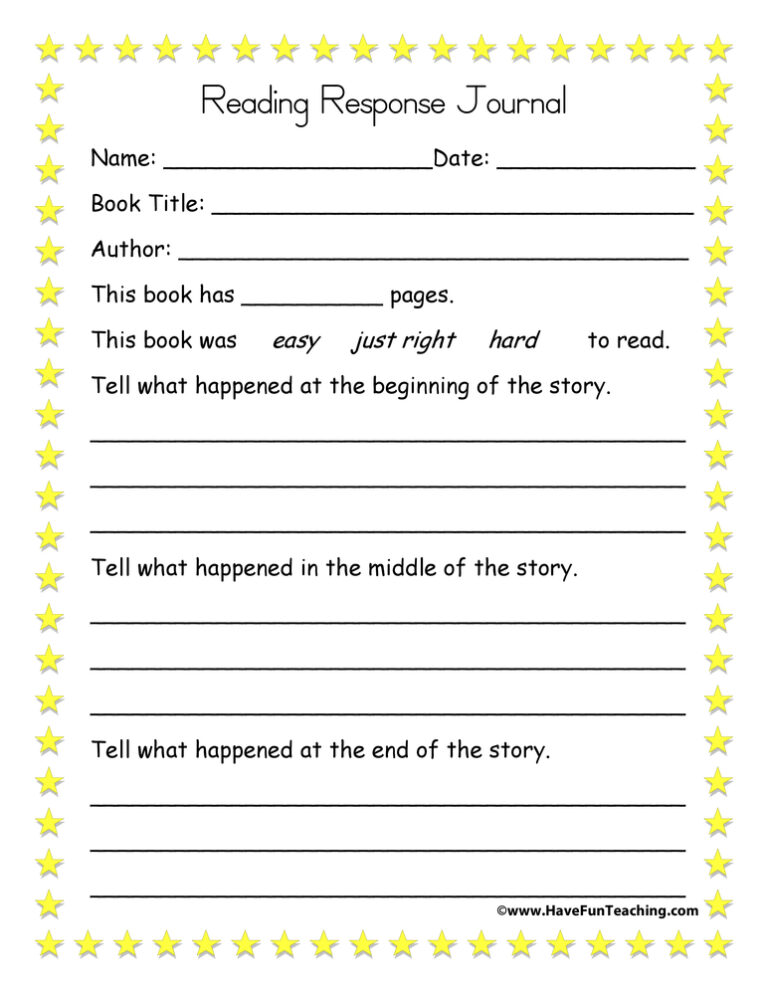
This beginning middle end reading response journal lets 2nd grade students record a book title and author, rate how hard it was, and retell the story in order for stronger reading.
Use this Group Reading Worksheet with 1st Grade guided reading groups. Kids write the book title, their group, what the story is about, and ideas they heard and shared.
This writing about a character worksheet asks 1st Grade students to draw a favorite book character and then write two things about them, turning any story they read into real writing practice.

A Finding Feelings Within a Text Worksheet for 2nd grade readers, with an original story about a nervous boy and questions asking which words show how he feels. An answer key is included, so checking takes seconds.
This Understanding a Text Worksheet helps second graders ask a who, what, where, when, why or how question about any story, write the answer, and draw a picture that shows it.
This describing who has seen the wind worksheet has 1st graders read a classic wind poem, then find and write the describing word in five sentences. An answer key is included.
Writing about Animals Worksheet helps 1st graders pick an animal they love and write what it looks like, what it eats, and where it lives on clear, roomy lines that build confident sentence writing.

This In My Own Words Worksheet gives 2nd graders three sentences to read and restate in their own words on wide writing lines. An answer key is included, so paraphrasing practice takes no prep at all.
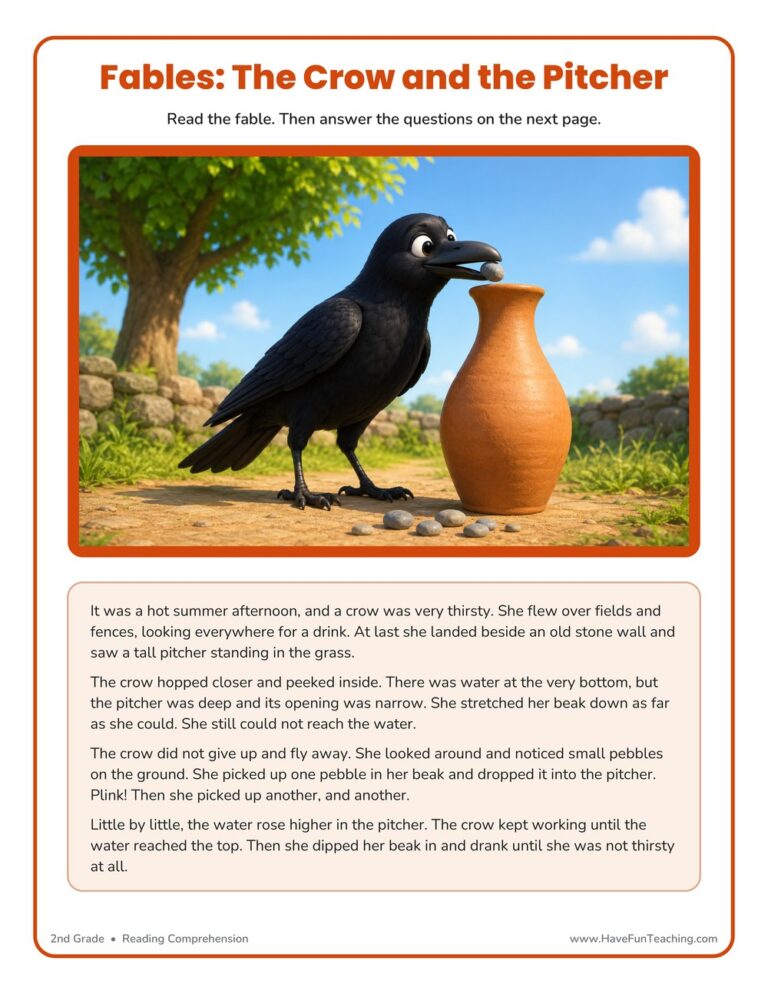
This Fables The Crow and The Pitcher Worksheet gives 2nd Grade readers an illustrated Aesop fable, comprehension questions, a sequencing activity, and a lesson response. Answer key included for quick, no-prep reading practice.
The Group Research Worksheet lets 2nd grade partners read books by one author, list each title, and write what they think, building reading response and teamwork skills.
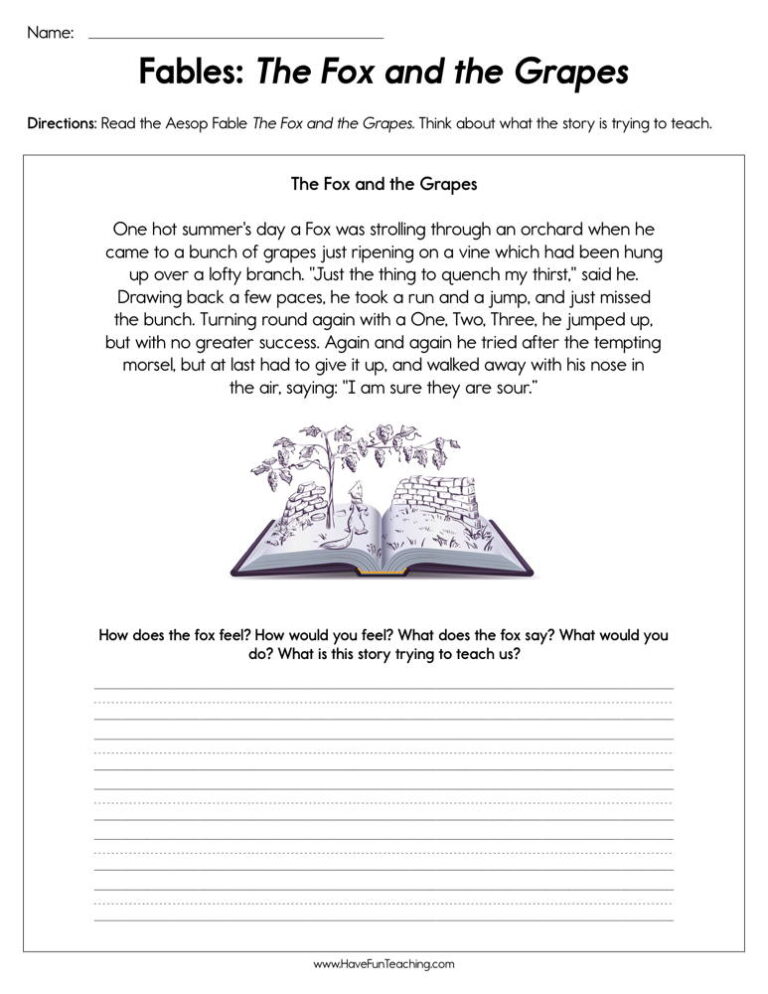
This Fables The Fox and The Grapes Worksheet gives 2nd Grade readers an original retelling of the Aesop fable, four comprehension questions and a written response on its lesson. An answer key is included.

The Writing about a Favorite Book Worksheet gives 1st Grade students three friendly prompts about the book they like best, with roomy lines that make writing about reading feel easy.



