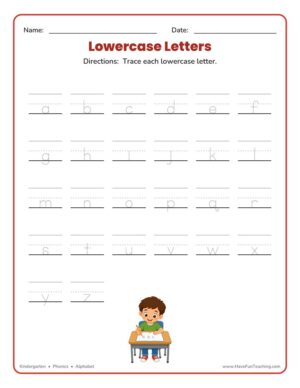
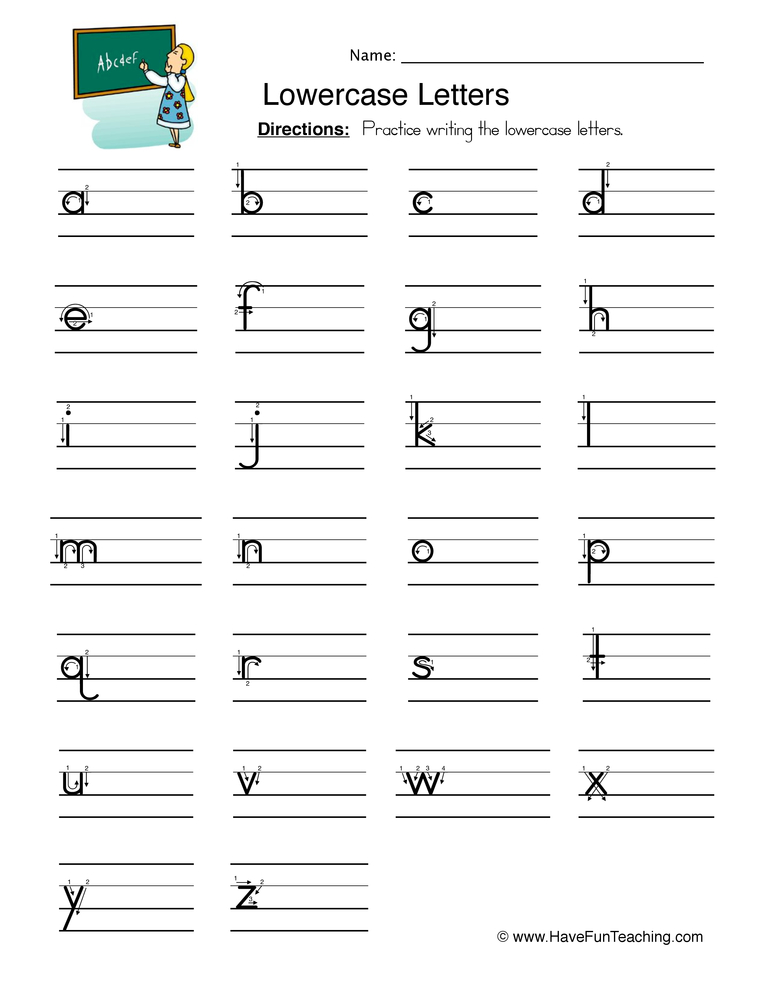
This lowercase letters writing worksheet gives Kindergarten students guided lines to trace every lowercase letter from a to z. Answer key included for quick, no-prep alphabet and handwriting practice.
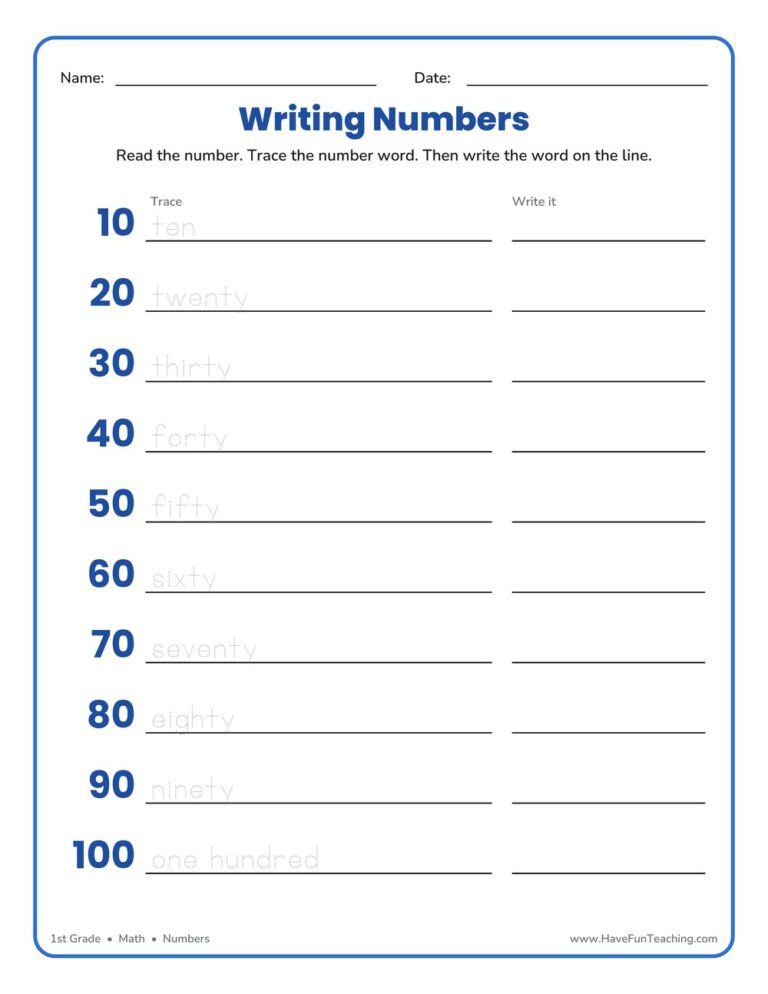
This Write Numbers to 100 Worksheet helps first graders trace and write number words from ten to one hundred while counting by tens. Answer key included — perfect for no-prep number word and handwriting practice.
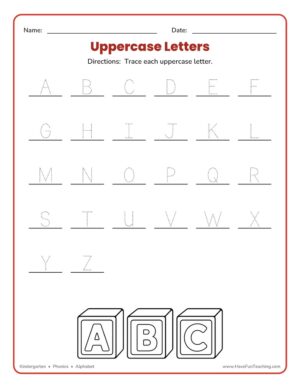
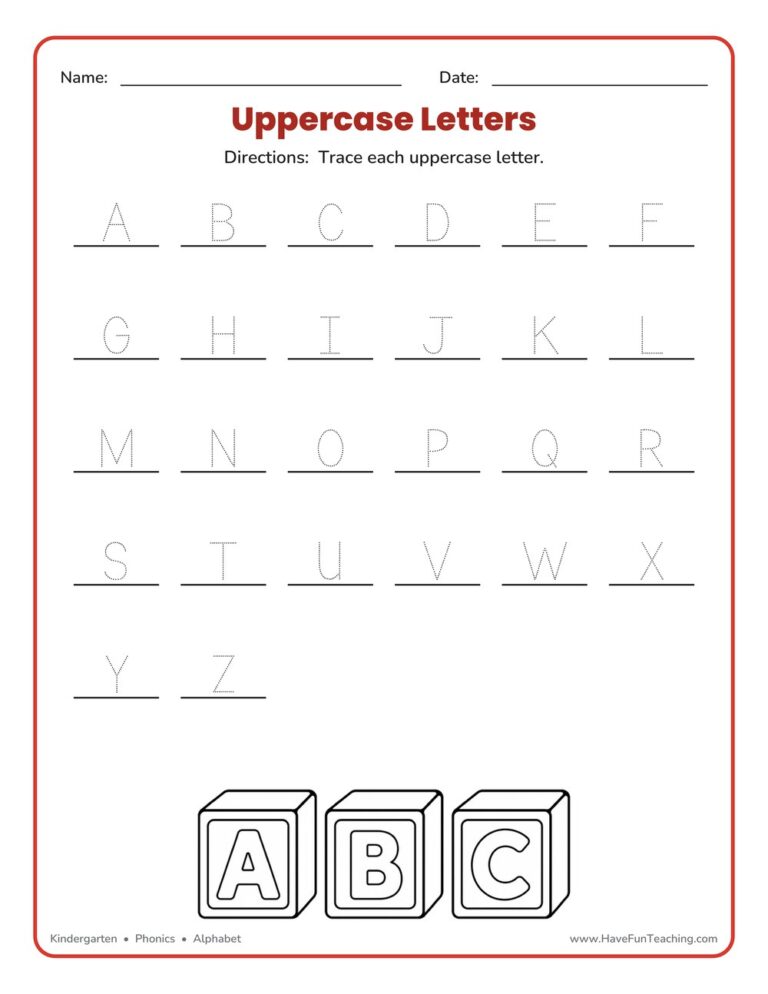
This uppercase letters writing worksheet lets kindergarteners trace all 26 capital letters A–Z on clean handwriting lines. Includes an answer key and a fun ABC coloring picture—perfect for no-prep alphabet handwriting practice.
These writing words worksheets give kindergarten students one page for each letter A to Z, where they think of words that begin with the letter and write them on handwriting guides.
Students trace and then write capital M, lowercase m, and the words map and mop on three-line guides in this Letter M Handwriting Practice Worksheet for Kindergarten. An answer key is included, so letter formation is quick to check.
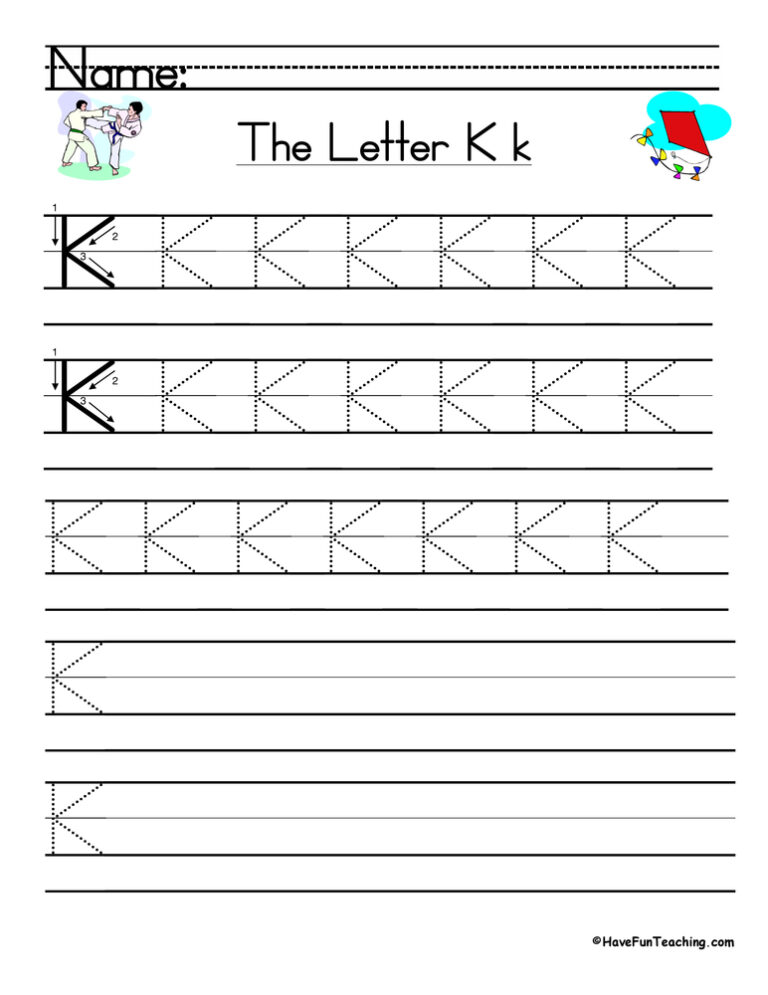
The Letter K Handwriting Practice Worksheet helps Kindergarten students trace and write uppercase K, lowercase k, and the words kite and key on three-line guides. Answer key included, so correct letter formation is always in view.
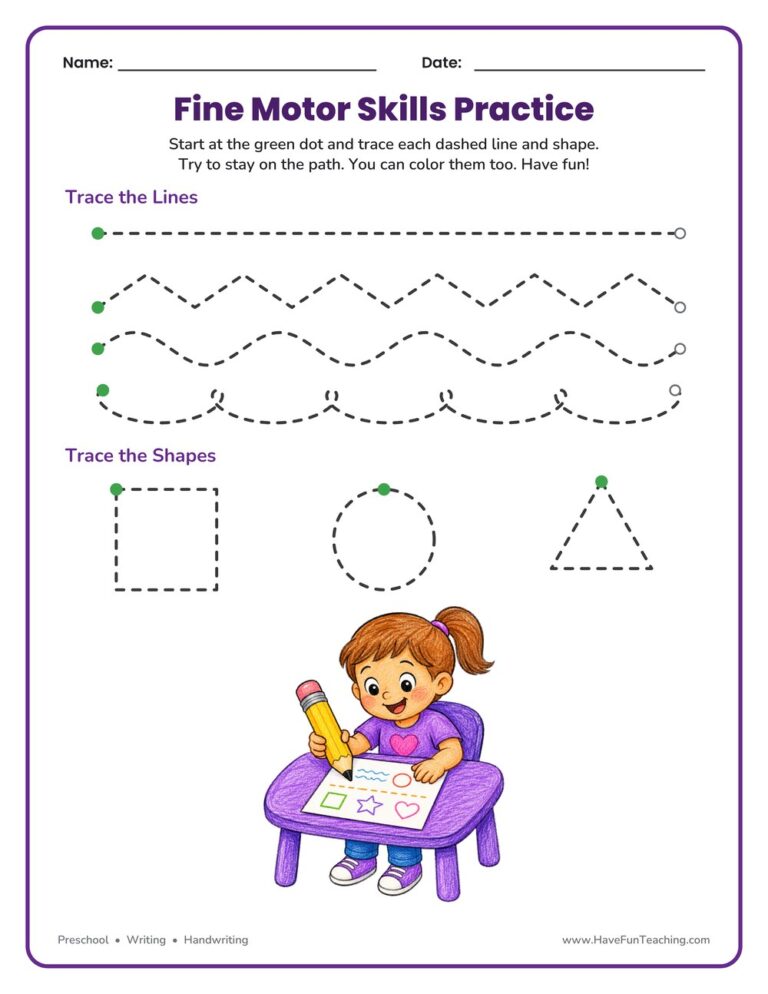
A preschool Fine Motor Skills Practice Worksheet where little learners trace dashed lines and shapes to strengthen pencil grip and hand control. Answer key included — perfect for no-prep writing readiness at home or school.
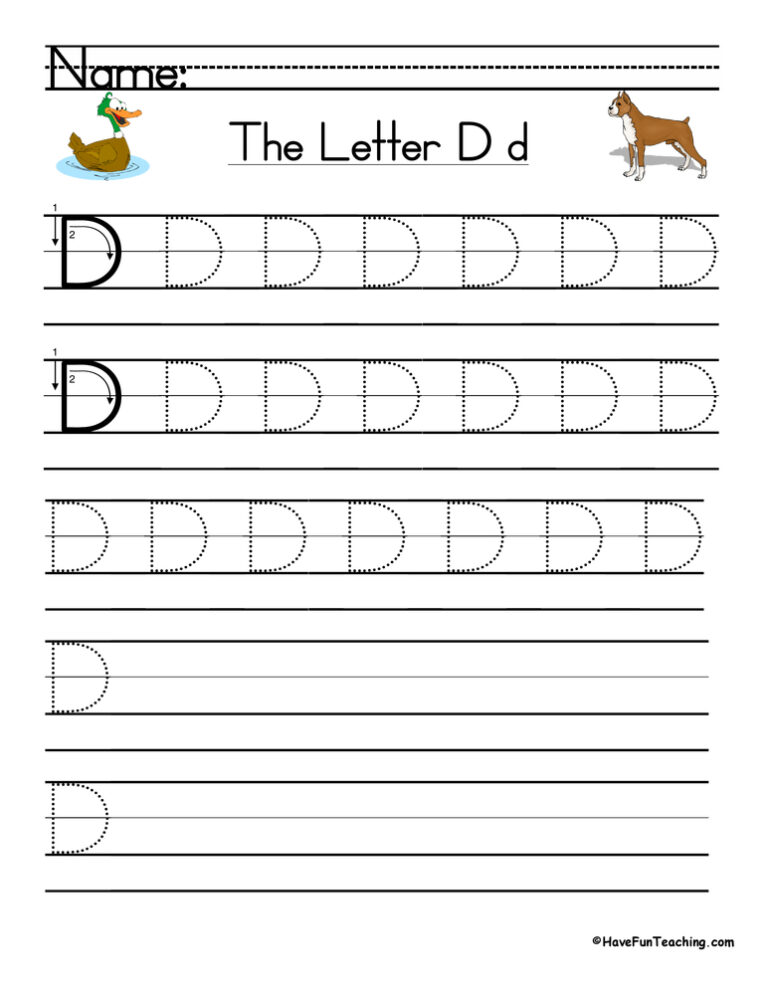
This Letter D Handwriting Practice Worksheet gives Kindergarten writers guided tracing and independent practice with uppercase D, lowercase d, and three picture words. Answer key included, so letter formation practice is ready in one print.
This Writing Your Address Worksheet helps 1st graders write their street address, city, state, and ZIP code, then match each part of an address to its name. Answer key included for quick, no-prep practice.
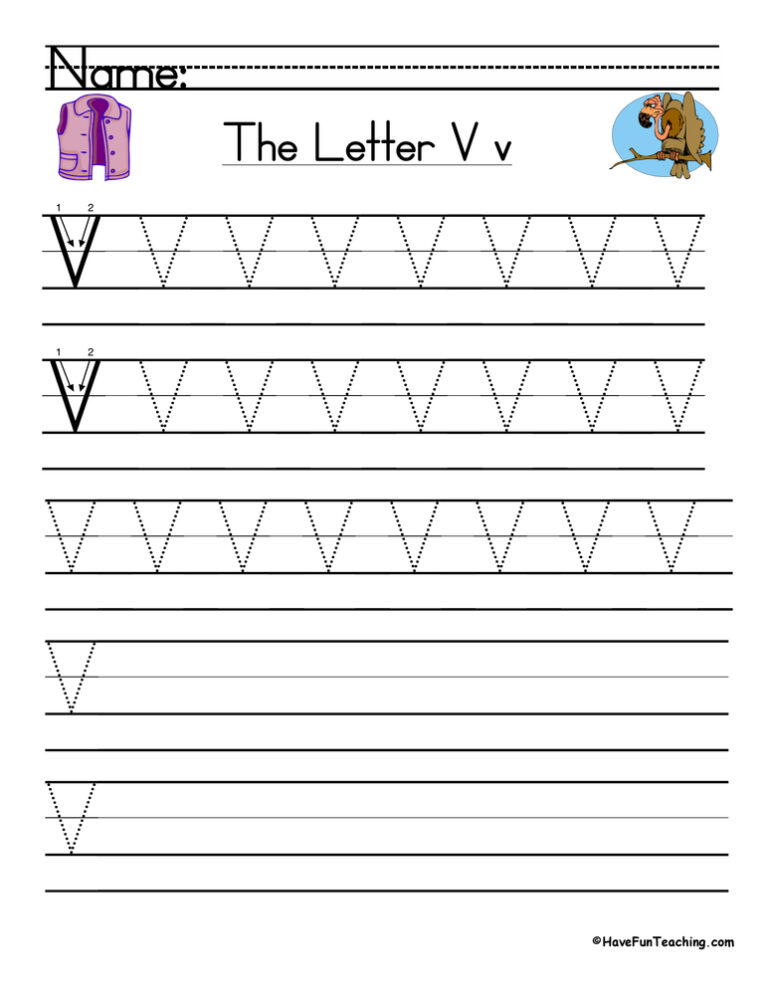
This Letter V Handwriting Practice Worksheet gives Kindergarten students traced and independent uppercase and lowercase V practice on three-line guides, plus van, vest, and vase word cards. Answer key included for quick, no-prep letter formation practice.
This Letter T Handwriting Practice Worksheet gives Kindergarten students trace-and-write practice for uppercase T and lowercase t, plus three picture words to trace. Answer key included.
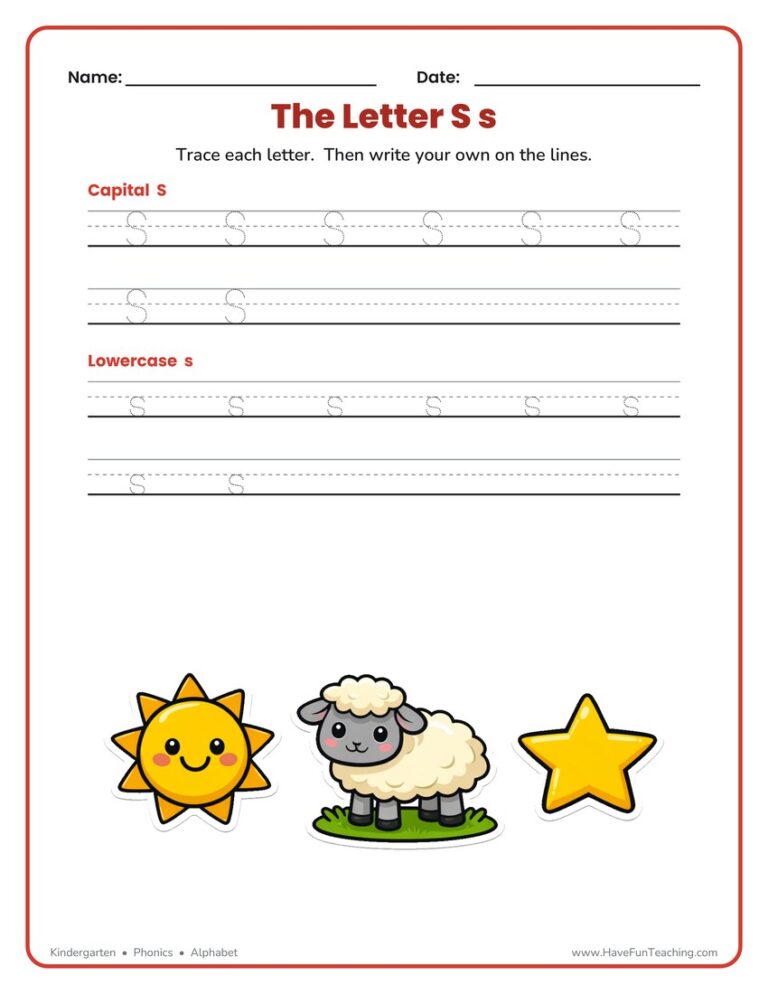
This Letter S Handwriting Practice Worksheet gives Kindergarten kids guided three-line practice to trace and then write capital S and lowercase s. An answer key is included, making it perfect for quick, no-prep alphabet handwriting practice.
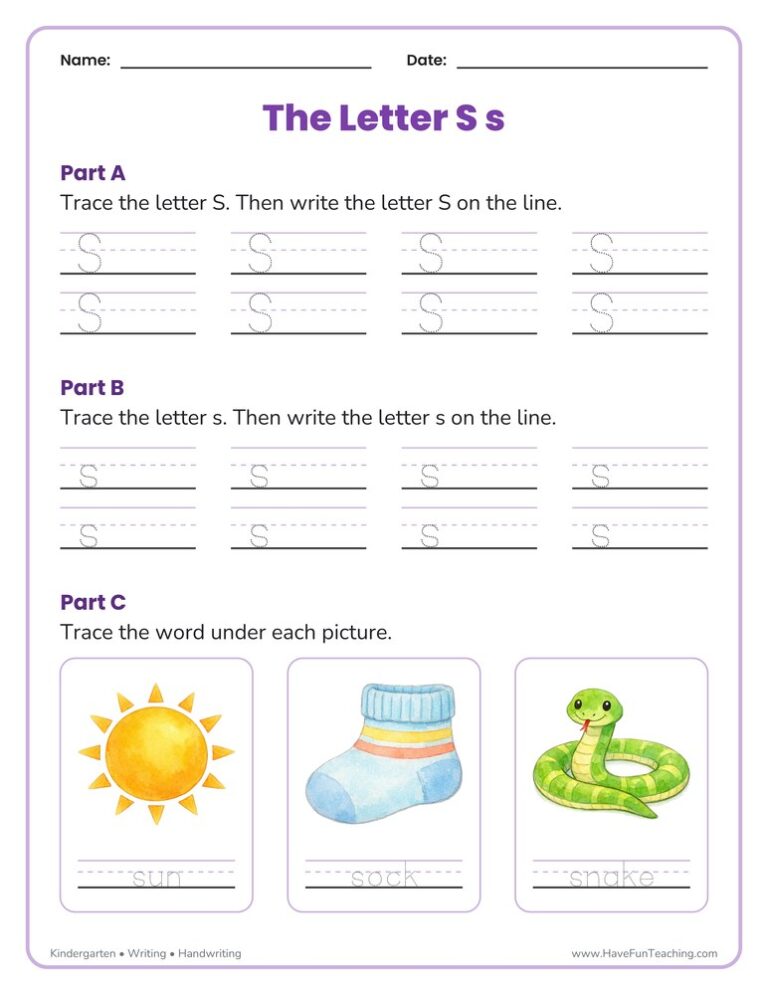
This letter s tracing worksheet gives kindergarten students three-line guides for capital S and lowercase s, plus picture words to trace. An answer key is included, so children build neat handwriting and hear the /s/ sound.
The Letter A Handwriting Practice Worksheet helps kindergarten students trace and write the uppercase and lowercase letter A on clear three-line guides. Includes an answer key — a simple, no-prep way to build early handwriting and letter recognition.
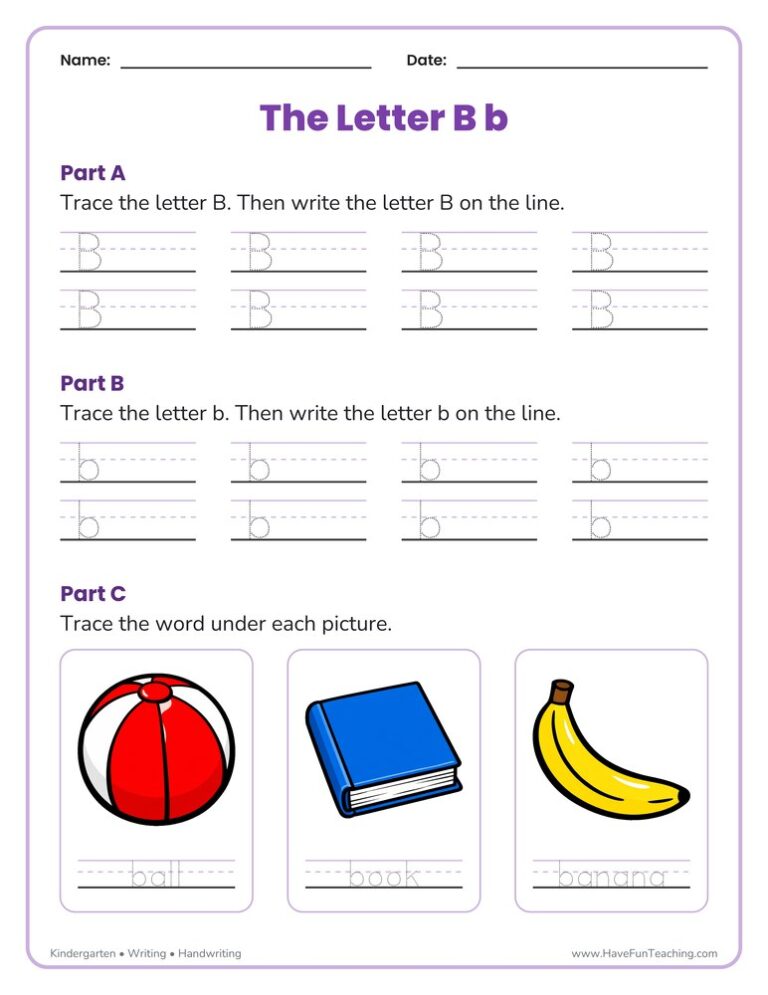
This letter b tracing worksheet gives kindergarten students three-line guides for capital B and lowercase b, plus picture words to trace. An answer key is included, so children build neat handwriting and hear the /b/ sound.
This Letter U Handwriting Practice Worksheet gives Kindergarten writers three-line guides for tracing and writing capital U and lowercase u, plus umbrella and unicorn word cards. Answer key included for confident letter formation.
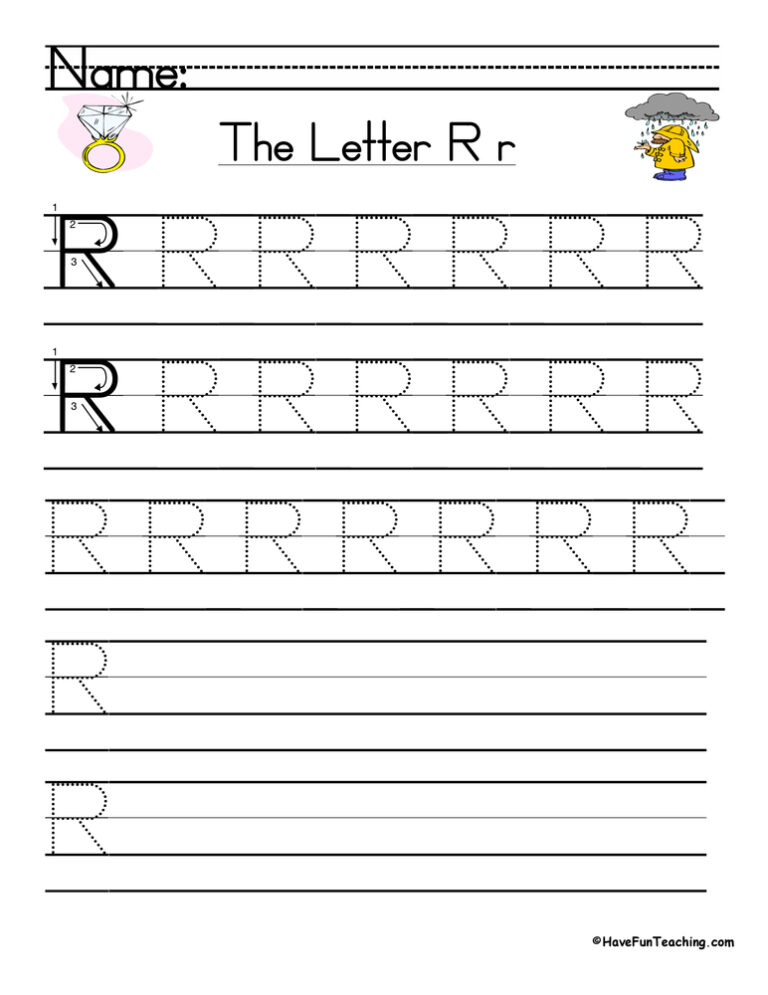
This Letter R Handwriting Practice Worksheet has Kindergarten students trace and write uppercase R and lowercase r on three-line guides, then trace the words rabbit and rainbow. Answer key included, so handwriting checks take seconds.
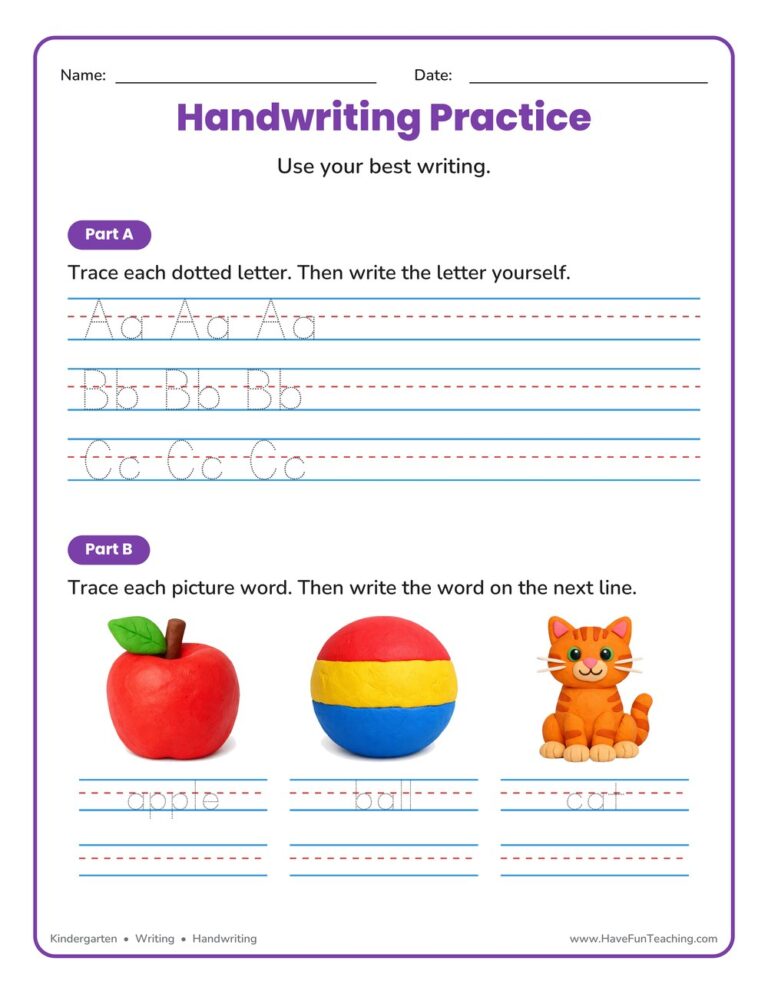
A Kindergarten handwriting practice paper with three-line guides for tracing and writing Aa, Bb, and Cc plus the picture words apple, ball, and cat. Answer key included, so letter formation practice is ready in one print.
Handwriting starts long before kids pick up a pencil, with fine motor play like squeezing, cutting and tracing. In preschool and kindergarten, kids learn to hold a pencil, form uppercase and lowercase letters, and write their names. They learn where letters sit on the lines: tall letters like b, d, h touch the top line, and letters like g, p, y dip below. In 1st and 2nd grade, the focus moves to spacing, size and writing neatly enough that others can read it. Many classes introduce cursive in 2nd or 3rd grade.
How we teach handwriting
Good handwriting comes from short, frequent practice and the right starting point for each letter. Here is what works.
Sing the letter, then write it
Play a letter song, then have kids "sky write" the letter in the air with big arm movements before they write it on paper. Big movements first help the brain learn the letter shape, then pencils make it neat.
Why it works: a catchy, repeating tune gives the brain a hook to hang words on, so sung text is remembered better (Wallace, 1994).
Show each letter step by step and say the strokes out loud: "Start at the top, pull down, back up, and around." Most messy letters come from starting in the wrong place. Fix the starting point and the rest gets easier.
Why it works: showing first, practicing together, then letting kids try alone is the "gradual release" model teachers have relied on for decades (Pearson and Gallagher, 1983).
Handwriting improves with short daily practice, not long sessions. Five minutes of focused letter practice each morning beats a whole page once a week. Have kids circle their best letter each day so they see their progress.
Why it works: spreading practice out over days is one of the two most effective study methods in a major research review (Dunlosky and colleagues, 2013).
Most children start forming letters around age 4 or 5. Before that, drawing, coloring, cutting and playdough build the hand strength they need.
Should kids learn uppercase or lowercase letters first?
Many teachers start with uppercase because the lines are simpler, then move quickly to lowercase. Lowercase letters are used far more often in reading and writing.
How can I improve my child's handwriting?
Check their pencil grip, make sure they start letters at the top, and practice a few minutes every day. Lined paper with a dotted middle line helps with letter size.
When do kids learn cursive?
It depends on the school. Many teach cursive in 2nd or 3rd grade, and some states require it.
Written by the Have Fun Teaching team of elementary teachers and homeschoolers. Research: Wallace, W. T. (1994). Memory for music: Effect of melody on recall of text. Journal of Experimental Psychology: Learning, Memory, and Cognition, 20(6). Pearson, P. D., & Gallagher, M. C. (1983). The instruction of reading comprehension. Contemporary Educational Psychology, 8(3). Dunlosky, J., Rawson, K. A., Marsh, E. J., Nathan, M. J., & Willingham, D. T. (2013). Improving Students' Learning With Effective Learning Techniques. Psychological Science in the Public Interest, 14(1).
3 days free
2:39Ready to print!
Printables · Songs · Games
Loved by 2 million teachers & families
Where learning feels like play.
Printables, songs and games for every subject, Preschool through 6th. Ready to teach today, and kids beg for more.
$0due today
then $39.97$35.97for your first year, and $39.97 a year after that.








 Try it withAlphabet Song (Animated Music Video)SongsOpen it →