Skip to content
Start My 3 Free Days $0 today · cancel anytime

Addition Activities

51 addition activities. Teacher favorites: Finding 10 More 10 Less Activity and Subtraction as an Unknown Addend Activity. How teachers use these

Addition Activities

51 addition activities. Teacher favorites: Finding 10 More 10 Less Activity and Subtraction as an Unknown Addend Activity. How teachers use these

Activity
Activity1st GradeFinding 10 More 10 Less Activity

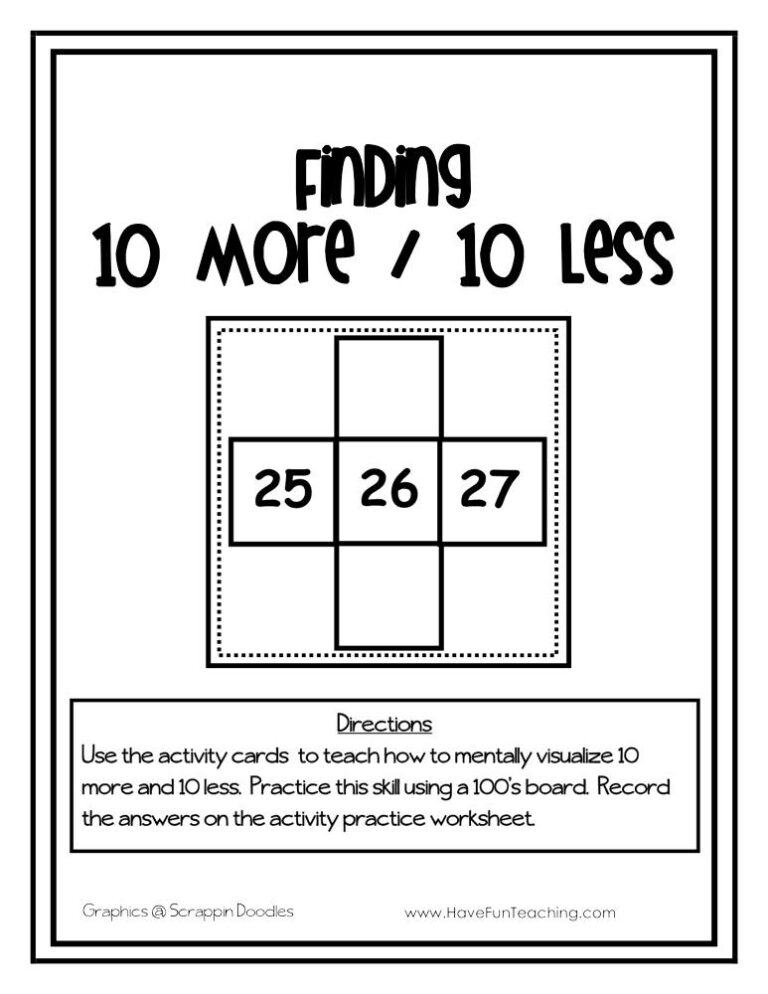
This finding 10 more 10 less activity helps 1st and 2nd grade children use a hundred chart to find 10 more and 10 less. Practice page and answer key included.

Activity
ActivityKindergartenSubtraction as an Unknown Addend Activity

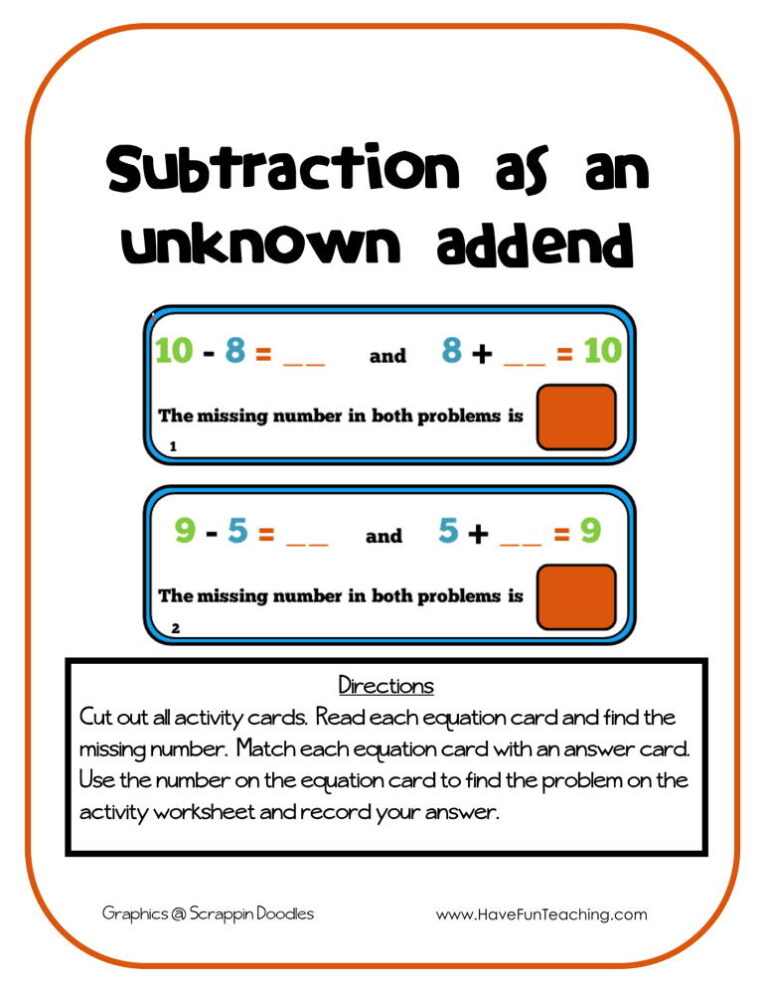
This subtraction as an unknown addend activity helps K through 2nd grade students solve subtraction within 20 by matching each fact to its addition fact card. Answer key included.

Activity
ActivityKindergartenTrue or False Equations Activity

While using our True or False Equations Activity, students sort each popcorn equation card under the true or false popcorn containers.

Activity
ActivityKindergartenCommutative Property of Addition Activity

Using Commutative Property of Addition Activity, studentsmatch the popcorn cards to the matching popcorn container to show examples of the property.

Activity
Activity1st GradeAdding and Subtracting Unknown Numbers Activity

Find the missing number in equations within 20 with this adding and subtracting unknown numbers activity for 1st and 2nd grade: matching cards, a recording sheet and practice, answer key included.

Activity
ActivityKindergartenCompose and Decompose Numbers 11-19 Activity

This compose and decompose numbers 11-19 activity has kindergarten and 1st grade children build teen numbers as ten and ones with ten-frames, counters and matching cards. Answer key included.

Activity
ActivityKindergartenDecomposing a Ten Frame Activity

This decomposing a ten frame activity helps kindergarten to 2nd grade students match ten frames to facts that make 10, with a practice page and answer key included.

Activity
ActivityKindergartenPlenty O' Pennies Counting Pennies Activity

Using Plenty O' Pennies Counting Pennies Activity, students practice counting pennies to build their coin counting skills.

Activity
ActivityKindergartenIce Cream Addition Sums of 5-10 Activity

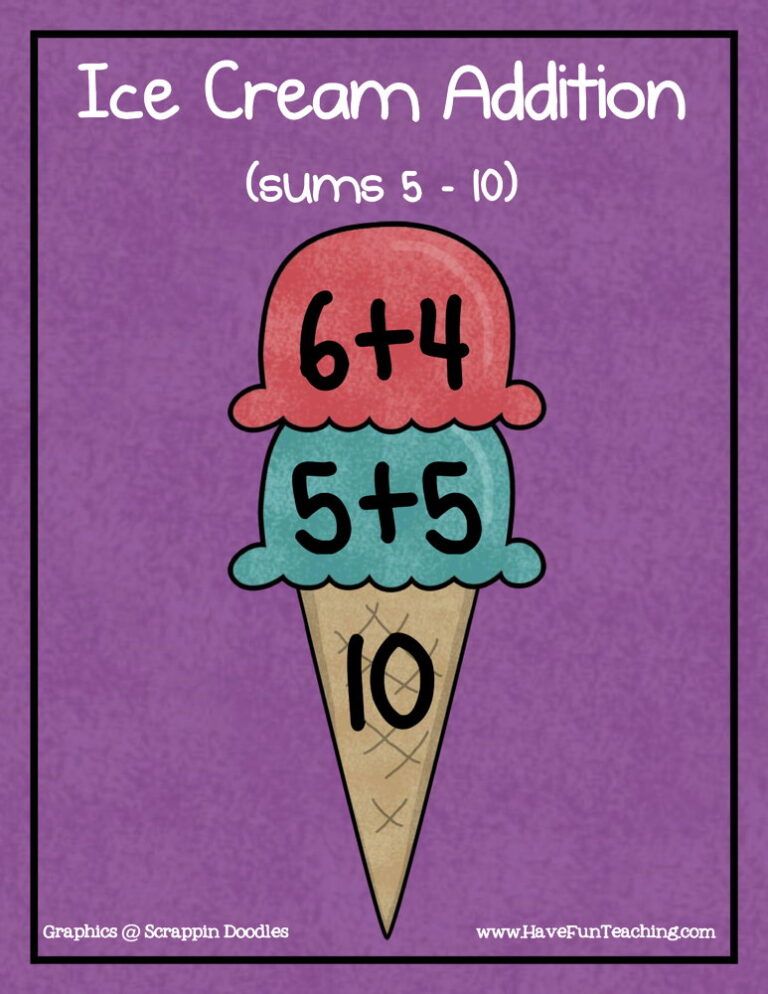
This ice cream addition sums of 5-10 activity has kindergarten and 1st grade students stack addition scoops on the cone with the matching sum. Answer key included.

Activity
Activity2nd GradeAdding and Subtracting to 1000 Activity

Children solve three-digit addition and subtraction problems with regrouping and fit each problem to its answer in 12 self-checking puzzles. For 2nd and 3rd grade; work sheet, practice page and answer key included.

Activity
ActivityKindergartenMissing Number Addition Activity

Using Missing Number Addition Activity, students fill in the missing addends to complete the addition number sentences.

Activity
ActivityKindergartenDoubles Addition Activity

Using Doubles Addition Activity, students solve doubles fact addition problems by matching equations and sums.

Activity
Activity1st GradeThree Addend Addition Activity

This three addend addition activity helps 1st-2nd grade students add three numbers by matching ice cream cones to scoops with the right sum. Answer key included.

Activity
Activity3rd GradeArithmetic Theme Park Multi-Step Word Problems Activity

This arithmetic theme park multi-step word problems activity has 3rd to 5th graders solve ticket problems and match each answer to a ride. Answer key included.

Activity
Activity1st GradeSweet Summer Treats Money Addition Activity

This Sweet Summer Treats money addition activity has 1st and 2nd grade students count coins and match them to treat prices, then add two prices. A practice page and answer key are included.

Activity
ActivityKindergartenAdding Three Numbers Activity

In this Adding Three Numbers Activity, students add three whole numbers together to solve by matching equation cards to answer cards.

Activity
Activity1st GradeA Dime A Dozen Counting Dimes Activity

Using A Dime A Dozen Counting Dimes Activity, students practice counting dimes amount by playing a "Go Fish" inspired game.

Activity
ActivityKindergartenSnickel-Doodles Counting Nickels Activity

Using Snickel-Doodles Counting Nickels Activity, studentspractice counting nickels and cents amounts usingthe Snicker-doodle cookies.

Activity
ActivityPreschoolSnowy Addition Activity

Using Snowy Addition Activity, students solve single fact addition problems by sorting equations under the correct sum heading.

Activity
Activity3rd GradeFrosting and Fractions Activity

Using this Frosting and Fractions Activity, students use the fraction bars to solve kitchen conundrums.

From our teachers' playbook

From counting bears to regrouping pros

What do kids learn about addition?

Addition grows a lot through elementary school. Kindergarteners join small groups of objects and add within 10. First and 2nd graders learn their facts within 20 and add two-digit numbers using tens and ones: 34 + 25 = 50 + 9 = 59. In 2nd and 3rd grade kids learn to regroup, or "carry," when the ones make a new ten, and by 4th grade they add multi-digit numbers with confidence. Along the way they learn handy rules, like 3 + 8 = 8 + 3. The click comes when kids see that every addition problem is just tens and ones working together!

Our favorite ways to teach addition

These moves work for beginners and big kids alike, just with bigger numbers.

Tens with tens, ones with ones

Hand kids base ten blocks for 46 + 27. They combine the rods, then the cubes, and trade 10 cubes for a new rod. Building regrouping with blocks makes "carry the one" make sense instead of feeling like a magic trick.

Why it works: the U.S. Department of Education's guide for teaching elementary math recommends moving from hands-on objects to drawings to numbers.

Adding Tens and Ones WorksheetTry it withAdding Tens and Ones WorksheetWorksheetsOpen it →

Share your strategy

Put one problem on the board, like 9 + 6, and ask kids how they solved it. One might make a ten, another might double 6 and add 3. Talking about different strategies helps every kid find a faster way.

Why it works: when kids say the precise math words, their understanding gets sharper, a recommendation of the U.S. Department of Education's elementary math guide.

Commutative and Associative Properties WorksheetTry it withCommutative and Associative Properties WorksheetWorksheetsOpen it →

A few problems every day

Five addition problems a day for a few weeks beats one big addition unit. Mix in older facts as new ones come along, so nothing gets forgotten.

Why it works: short practice spread over several days beats one long session, according to a large review of learning research (Dunlosky and colleagues, 2013).

Adding and Subtracting Within 100 WorksheetTry it withAdding and Subtracting Within 100 WorksheetWorksheetsOpen it →

Questions parents and teachers ask about addition

What age do kids learn addition?

Kids start adding with objects in preschool and kindergarten, usually around ages 4 to 6. They learn addition facts within 20 in 1st and 2nd grade, and multi-digit addition by 3rd and 4th grade.

What is regrouping in addition?

Regrouping, sometimes called carrying, happens when the ones add up to 10 or more. You trade 10 ones for 1 ten and move it to the tens place. For example, in 28 + 15, the 8 and 5 make 13, so you write 3 and carry 1 ten.

How can I help my child learn addition facts?

Practice a few facts at a time with games, flash cards or dice. Start with doubles and making ten, which help with harder facts. A few minutes a day works better than long sessions.

What are addition strategies?

Strategies are shortcuts kids use instead of counting by ones. Common ones are counting on, making ten, using doubles and breaking numbers into tens and ones.