Skip to content
Start My 3 Free Days $0 today · cancel anytime

Phonics Activities

128 phonics activities, covering vowels, consonants, alphabet, plus 14 more topics. How teachers use these

Phonics Activities

128 phonics activities, covering vowels, consonants, alphabet, plus 14 more topics. How teachers use these

Activity
ActivityPreschoolAlphabet Uppercase Letter Matching Activity

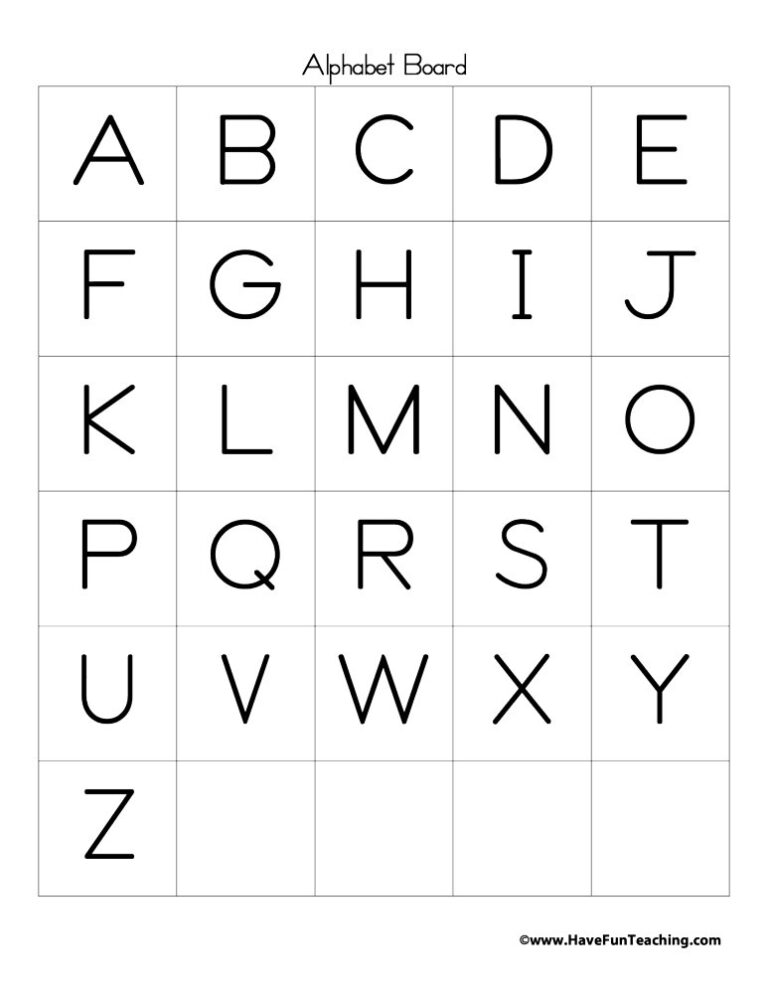
This alphabet uppercase letter matching activity has preschool, kindergarten, and 1st grade children match 26 letter cards to a game board. A practice page and answer key are included for easy letter recognition fun.

Activity
ActivityKindergartenPopcorn Blends Activity

In this popcorn blends activity, K-2nd Grade children spin a blend, sort 12 picture cards into popcorn boxes and fill in a practice page, with an answer key included for quick checking.

Activity
ActivityKindergartenShort Vowel A Word Sort Activity

This short vowel a word sort activity gives kindergarten and 1st grade readers 24 word cards to sort into the at, an, ap and ag families, plus a sort mat and practice page. Answer key included.

Activity
ActivityKindergartenShort Vowel Pumpkin Patch Activity

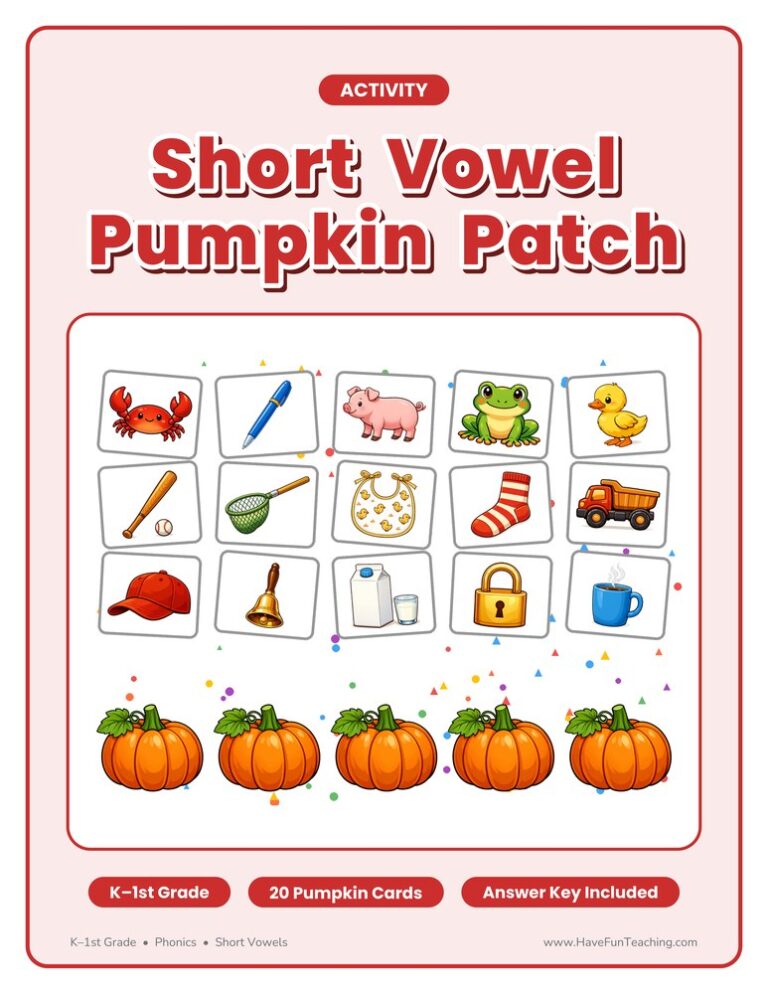
This short vowel pumpkin patch activity helps K-1st grade children hear short a, e, i, o and u sounds with a fall picture sort and recording page. Answer key included.

Activity
ActivityKindergartenLong Vowel U Puzzle

Using this Long Vowel U Puzzle, students match together puzzle pieces showing pictures and long U vowel sounds.

Activity
Activity1st GradeShort and Long Vowel A CVCe Activity

This short and long vowel a CVCe activity gives 1st and 2nd grade readers 24 word cards for a silent e matching game, a sort mat and a practice page. Answer key included.

Activity
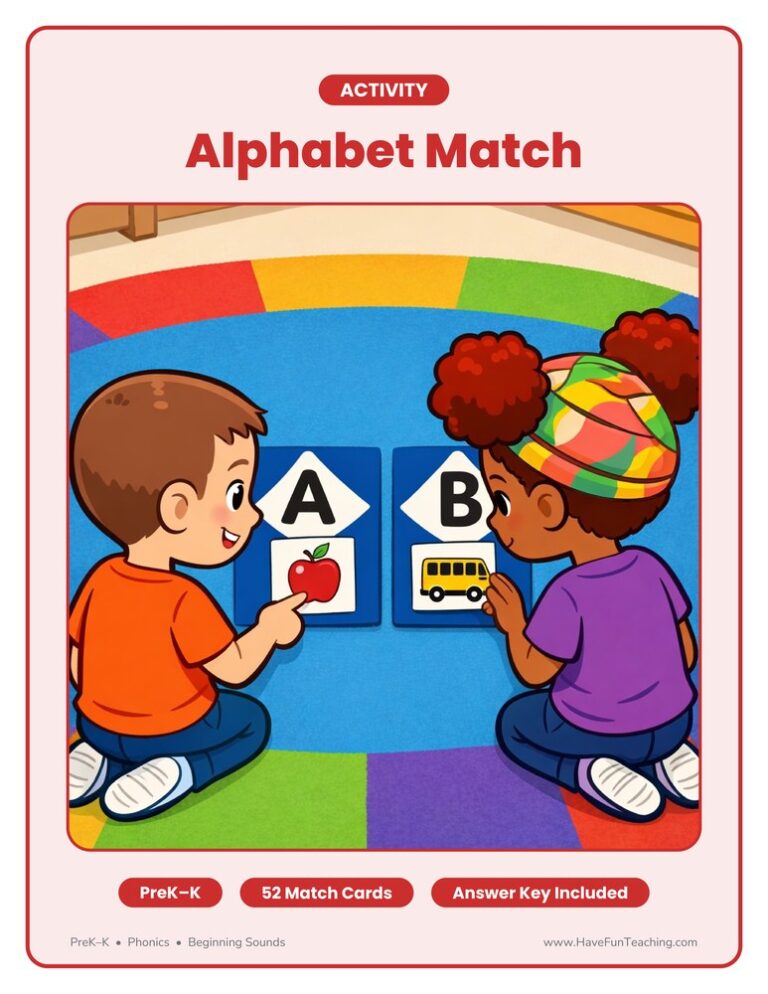
ActivityPreschoolAlphabet Match Activity

This alphabet match activity has preschool and kindergarten students match 26 picture cards to the letter of their beginning sound, then practice on a worksheet. Answer key included for quick checking.

Activity
ActivityKindergartenBlends, Digraphs, and Trigraphs Activity

Using the Blends, Digraphs, and Trigraphs Activity, students create lists of words that have beginning and ending blends, digraphs, or trigraphs.

Activity
ActivityKindergartenWord Work Activity

This word work activity lets kindergarten and 1st grade students build CVC words with color-coded consonant and vowel tiles, then write each word. An answer key is included for quick checking.

Activity
ActivityPreschoolBeginning and Ending Sounds Activity

This beginning and ending sounds activity uses 12 picture clip cards and a recording sheet so preschool to 1st grade students find first and last letters. Answer key included.

Activity
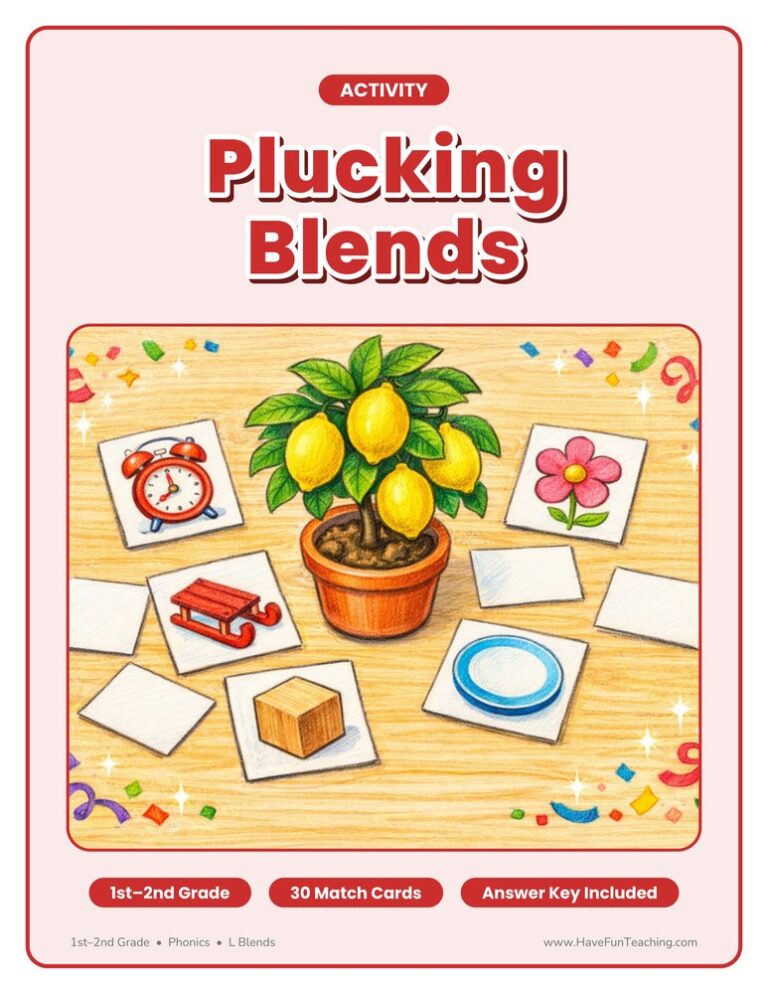
Activity1st GradePlucking Blends L Blend Activity

This l blend activity has 1st and 2nd grade students match picture cards to word cards and sort words by bl, cl, fl, pl and sl. Answer key included.

Activity
ActivityPreschoolConsonant Sounds Activity

Practice beginning sounds with this consonant sounds activity for Preschool through 1st Grade. Kids stack picture scoops on letter cones, then finish a practice page. Answer key included.

Activity
ActivityKindergartenConsonant Digraphs CH SH TH WH Activity

In this consonant digraphs ch sh th wh activity, Kindergarten to 3rd Grade students sort 16 picture-word cards by their first sound, with an answer key included for easy checking.

Activity
ActivityPreschoolLowercase Letters Activity

This lowercase letters activity is a Gumball Hunt card game for Preschool to 1st grade that helps children name all 26 small letters. Answer key included for quick checking.

Activity
ActivityPreschoolAlphabet Picture Matching Activity

This alphabet picture matching activity helps preschool and kindergarten students say each picture name and match it to its beginning letter. Answer key included.

Activity
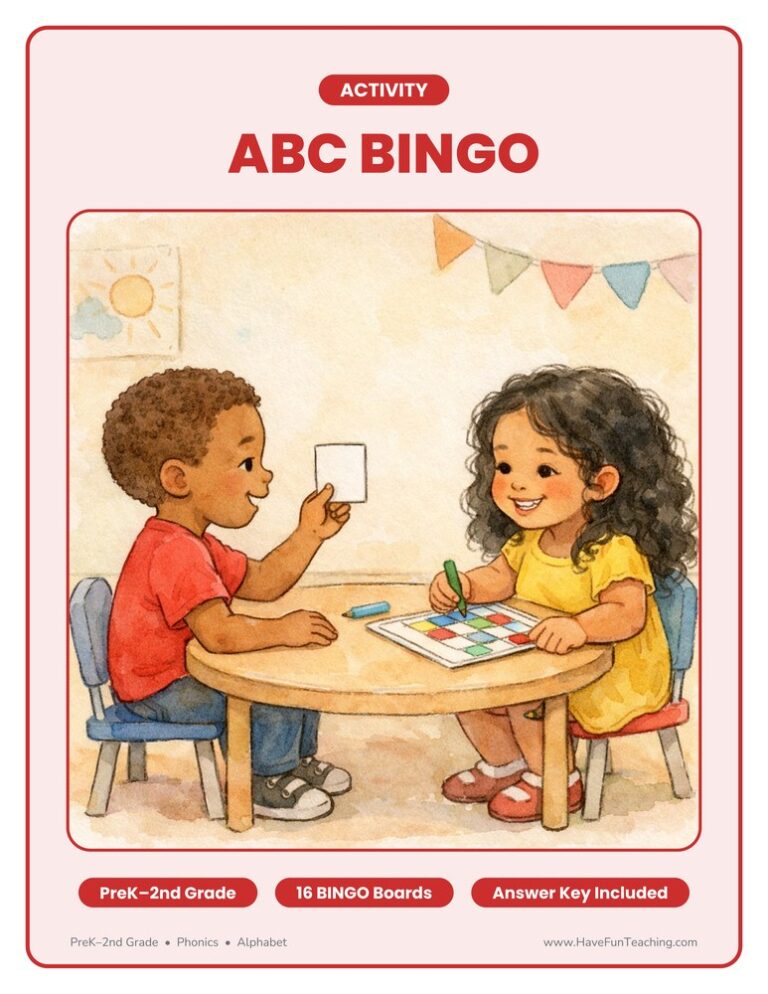
ActivityPreschoolAlphabet BINGO

This alphabet bingo activity helps children find and name lowercase letters with 16 game boards. Made for Preschool to 2nd Grade, with a practice page and answer key included.

Activity
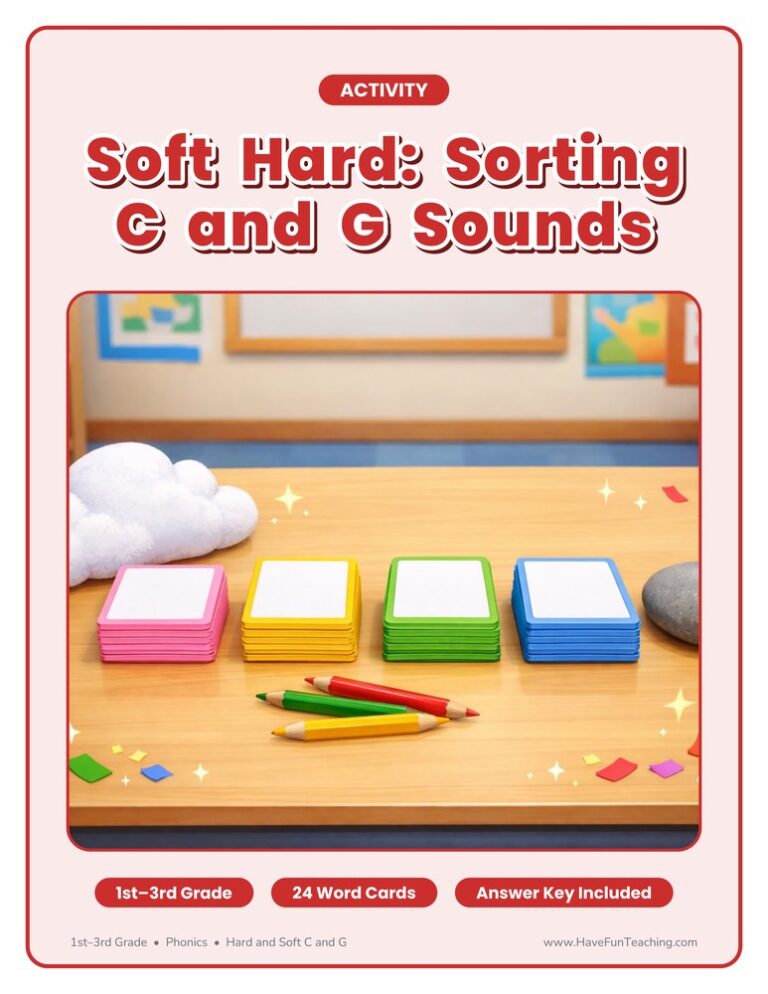
Activity1st GradeHard and Soft C and G Activity

This hard and soft c and g activity helps 1st to 3rd grade students sort words by the sound of c or g using a simple rule. A sound sort sheet, practice page and answer key are included.

Activity
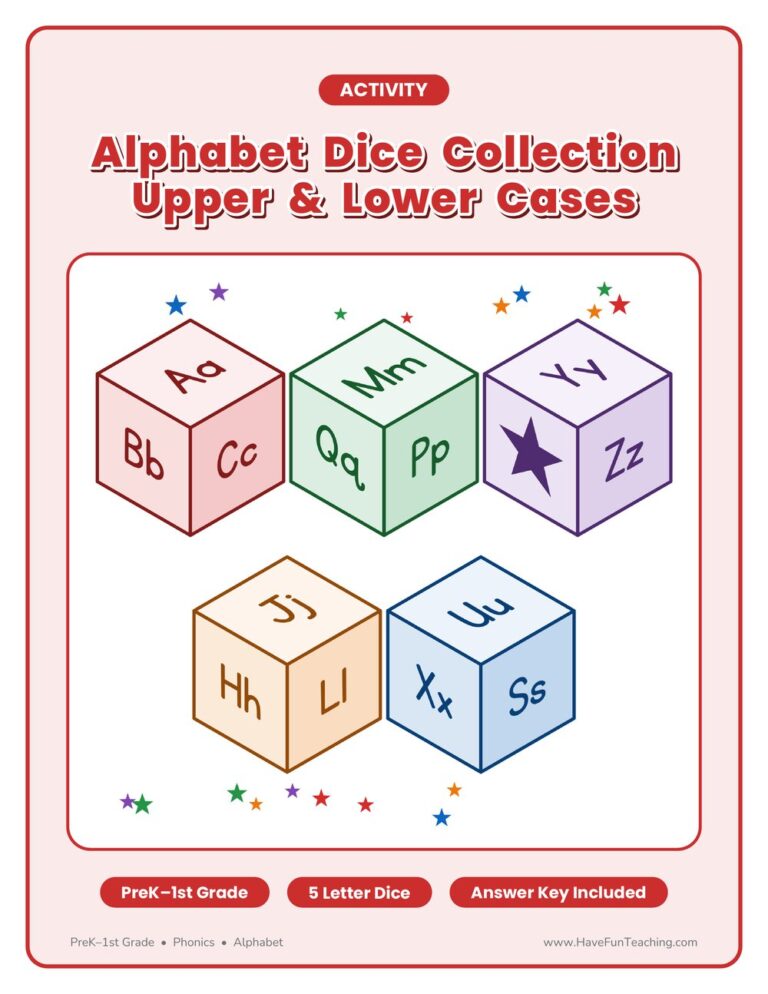
ActivityPreschoolAlphabet Dice Collection Upper & Lower Cases

This alphabet dice activity has children roll, name, and match uppercase and lowercase letters for Preschool to 1st Grade, with an answer key included for quick checking.

Activity
ActivityKindergartenShort Vowel Garden Activity

Plant picture cards by sound in this short vowel garden activity for Kindergarten and 1st grade. Children sort pictures into a, e, i, o and u pots. Answer key included.

Activity
ActivityPreschoolFall CVC Mat Activity

Kids build short-vowel words with pumpkin tiles in this Fall CVC Mat Activity for preschool to 1st grade. Answer key included, so checking each word mat is fast.

From our teachers' playbook

Sounds, blends and the joy of decoding

What do kids learn in phonics?

Phonics teaches kids how letters and sounds work together so they can read and spell new words. It starts with single letter sounds and blending short words: c-a-t = cat. Next come digraphs like sh, ch and th, then blends, silent e, vowel teams like ai and ee, and bossy r words like car and bird. Older kids move on to prefixes, suffixes and Greek and Latin roots. The click moment is when a child sounds out a word they have never seen and reads it all by themselves!

Our favorite ways to teach phonics

Phonics sticks when it is explicit, a little bit every day, and full of real reading. These are our go-to moves.

Sort the sounds

Give kids a digraph word list and have them sort the words into sh, ch and th columns. Say each word out loud before sorting it. Hearing, seeing and moving the word all at once builds a strong sound-letter link.

Why it works: the National Reading Panel found that systematic, explicit phonics teaching clearly improves how children learn to read.
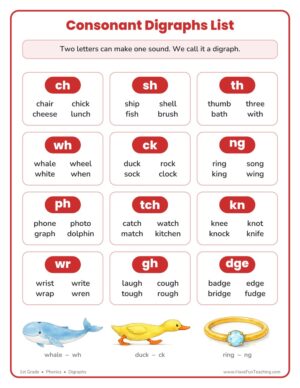
Digraphs Word ListTry it withDigraphs Word ListWorksheetsOpen it →

Read it in a real story

Once kids learn short e, hand them a decodable story like Ben and the Eggs. Have them read it aloud and answer the questions. It shows you right away who can apply the pattern and who needs another round.

Why it works: pulling an answer out of memory makes it stick far better than rereading it, one of the strongest findings in learning research (Dunlosky and colleagues, 2013).

Ben and the Eggs Phonics Reading Comprehension Story Worksheet - Short Vowel E SoundTry it withBen and the Eggs Phonics Reading Comprehension Story Worksheet - Short Vowel E SoundAssessmentsOpen it →

Five-minute review game

Keep yesterday's patterns alive with a quick daily game. A short vowel review game at the start of phonics time keeps old sounds sharp while you teach new ones.

Why it works: short practice spread over several days beats one long session, according to a large review of learning research (Dunlosky and colleagues, 2013).

Short Vowel Review GameTry it withShort Vowel Review GameGamesOpen it →

Questions parents and teachers ask about phonics

What is phonics?

Phonics is the connection between letters and the sounds they make. Kids use it to sound out, or decode, words when reading and to spell words when writing.

What order should phonics skills be taught?

Most programs go letter sounds, short vowel words, digraphs and blends, silent e, vowel teams, then r-controlled vowels. Prefixes, suffixes and word roots come later in the elementary grades.

What age should kids start phonics?

Many kids start learning letter sounds in preschool, and formal phonics usually runs from kindergarten through 2nd or 3rd grade. Older students keep building word skills with prefixes, suffixes and roots.

How can I practice phonics at home?

Read decodable books together, play quick sound games, and have your child sound out words on signs and cereal boxes. Five to ten minutes a day goes a long way.

What is the difference between phonics and phonemic awareness?

Phonemic awareness is hearing and playing with sounds, with no letters at all, like clapping the sounds in "dog." Phonics connects those sounds to written letters.